All Posts By

wecyclerseditor

Featured

Good, Better, Best — Cutting Down Paper Waste

Orange handled scissors cutting white paper on white background

Paper is one of the easiest materials to recycle, but it still makes up the largest component of Americans’ garbage.

A full 25% of global solid waste is paper and paperboard (also called “cardboard”). Eliminating paper waste completely would require a Herculean effort for most people, but whether you want to do good, better, or best, you can reduce your paper waste and recycle more of the paper you do use.

General Stats and Facts About Paper (Consumption & Production)

  • Global paper use has increased by 400% in the last 40 years.
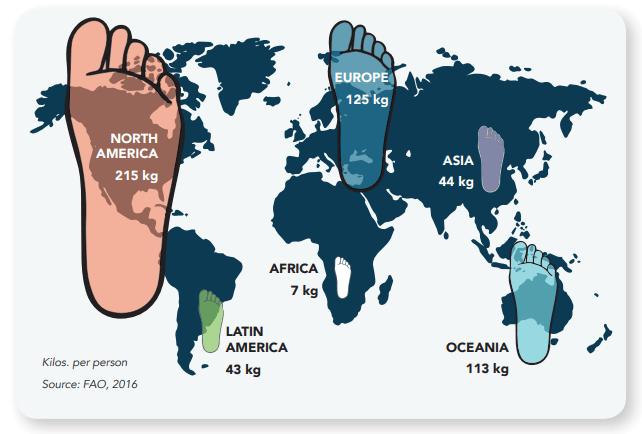
  • The average person in Africa uses more than 7 kg of paper every year. That’s the highest paper usage figure per capita worldwide.
  • Every year more than 24 billion newspapers, 350 million magazines and 2 billion books are published in the US alone.
  • This is how per capita paper consumption (by region) looked on the World map not so long ago, in 2016:
  • To meet the global demand paper production volumes currently exceed 300 million metric tons per year.  Perhaps more people should switch to ebooks?
  • This number is over 400 million when we look at the combined paper and cardboard data

Despite the overall increase in waste generation, paper waste has been declining since 2005.

Less paper is being generated to throw away, thanks to increasing digitization. But with paper filling a full quarter of our garbage bins, there is still a lot of it going to waste.


Good

You can take simple steps to reduce the amount of paper you use. Despite China’s ban disrupting the curbside recycling system in America, paper is still recyclable in most communities. Paper recycling takes almost no effort and makes a big difference to the planet.

Here is how to be good about paper waste:

  • The simplest way to reduce the amount of paper and cardboard you throw away is to recycle paper through your curbside program.
  • Recycle only clean paper. Wishful recycling of soiled paper can contaminate the entire load.
  • Subscribe to the digital version of the newspaper instead of print
  • Set your printer to two-sided printing, and reuse paper before recycling it.
  • Choose paper products made with recycled content.

Better

If you want to do better than good, or if your community does not have curbside recycling, a little effort goes a long way.

Contact your waste management agency to let them know you value recycling. To manage paper waste better, you’ll need to recycle more and gradually replace paper products with reusable ones:

  • Register on www.wecyclers.com and search our outlets close to you on your computer to find a recycler near you. Even if you have curbside service, use the database to find out where you can recycle other types of paper like paperback books or drink boxes.
  • Dirty paper towels, disposable napkins, and pizza boxes cannot be recycled. But they can be composted. Find out if your community offers yard waste recycling If they don’t, start a home compost bin.
  • Avoid the paper or plastic problem with reusable shopping and tote bags.
  • Replace sack lunches with a lunchbox
  • Digitize everything you can. Use note-taking apps and electronic calendars instead of notebooks; sign up for electronic billing and digital magazines

Best

Because paper is easily recyclable, paper products are often the greener choice among materials. So while plastic-free is a goal for many, few people seriously attempt a paper-free lifestyle.

To achieve zero waste, do the best you can to eliminate paper and recycle everything you do use. If you’ve already accomplished the Good and Better goals, you will have noticed that food packaging makes up most of the paper waste you have left.

  • Zero waste grocery shopping requires a major shift in shopping habits — seeking out new stores and bulk products, carrying reusable containers, and making a lot more food from scratch — but it will have a big impact on the amount of paperboard you use.
  • Eliminating pizza boxes and take-out containers will require more home cooking.
  • Next, consider napkins, tissues, and paper towels. Switching to cloth napkins is easy, while handkerchiefs may be a little harder. Breaking the addiction to paper towels instead of just composting them will require rethinking how you clean. But sponges, scrub brushes, and cloth towels work just as well or better than paper.


Featured

A policy guide for Nigerian States looking to navigate sustainable management of post-consumer recyclable waste

Bilikiss Adebiyi-Abiola

Bilikiss Adebiyi-Abiola
Founder, Wecyclers 

In my earlier article, I talked about why a working Extended Producer Responsibility (EPR) framework would help to provide a way out of poverty for the many people living at the base of the pyramid. In this article, I will provide practical steps for successfully implementing EPR and will demonstrate why it is critical for States to play a role in implementing EPR.

In a country like Nigeria with a federal system of government, policy creation comes from the Federal Government. Apart from being closer to the people, a lot of responsibility has been thrust on States by the constitution. The first alteration of the Constitution act, 2010 as amended in section 20 states that the State shall protect and improve the environment and safeguard the water, air and land, forest, and wildlife of Nigeria. In addition, the fourth schedule of the constitution gives powers for refuse disposal to Local Governments, however, due to a lack of ability to fund such an endeavor, this has evolved to become the responsibility of States. It is therefore imperative that for any meaningful policy change to occur, it needs to be carried out and implemented at the State level.

How Extended Producer Responsibility (EPR) Works

Producers

Companies or producers make products that they put in packaging, for instance, beverages are put in bottles and then sold on the market.

Consumers

The consumer consumes the beverages and is ideally supposed to dispose of this responsibly by discarding it in a recycling bin.

Producer Responsibility Organization (PRO)

Under Extended Producer Responsibility, Companies are required to become members of industry organizations called Producer Responsibility Organizations (PRO) that are saddled with the responsibility of buying back their waste packaging and enabling the operations for the management of the post-consumer waste.

Government Regulator

The Government regulator, in this case, National Environmental Standards and Regulations Enforcement Agency (NESREA), is responsible for registering companies and overseeing the process.

No alt text provided for this image

Source: National Environmental Standards and Regulations Enforcement Agency (NESREA)

Under EPR, for every unit of packaging producers sell, a portion of the selling price needs to be paid into a fund managed by the PRO that would ensure that the packaging is collected back and managed appropriately. To make this illustration easy, I will use plastic bottles, which are very prolific, and a current concern in the environment globally. In the old days, we used to consume our beverages from glass bottles and this was carried out under an exchange system. We only bought the contents of those bottles, so we were required to purchase and consume the beverages at the store and return the glass bottles or provide a bottle as an exchange for the one we purchase. Now, due to a growing population with busier schedules, it is much more convenient to buy beverages in plastic containers which has led to the situation we find ourselves in. In the developing world where there is inadequate infrastructure to support collection as well as low public awareness and understanding of proper waste management practices, a lot of packaging ends up becoming litter. This litter washes into drainages and ends up in the ocean.

Graphic showing how plastic ends up in oceans

No alt text provided for this image

Source: United States National Ocean Service

The Gap

Nigeria, through NESREA has taken an important step forward and has introduced EPR, however for this to work, targets need to be set, this would mean that companies are paying an amount commensurate with the quantum of the packaging of the products they sell.

Because waste management is the responsibility of sub-nationals, negative externalities caused by waste packaging are suddenly their problem and their failure. This is because the economic cost required to clean up their packaging from communities is not being adequately priced and is not being contributed by producers. When waste becomes litter, it falls through the cracks and becomes the problem of these sub-nationals who are cash strapped and unable to pay the cost for cleanup.

To bridge this gap, Producer Responsibility Organizations should be mandated to have a dedicated fund that could be tailored towards addressing the waste issues for each State. Funds generated should be applied toward overhead, awareness, incentives and investments in those States. According to Jennifer Uchendu of SustyVibes “domestication is important, there is no one size fits all solution for Nigeria” This makes sense, because the problems faced by Lagos are of a far greater magnitude than say Jigawa or even neighboring Ogun State.

This means that NESREA should not stop at introducing EPR, they should work with various States to put local targets in place, which would be monitored by the various States. 

A workable solution for plastic bottles

According to the Food and Beverage Recycling Alliance (FBRA), in 2018, Nigeria pumped 150,000 tons of plastic bottles alone annually into the system, a whopping 50% of the consumption happens in Lagos (1).

No alt text provided for this image

If we assume that a beverage is sold for 100 naira and just 1 naira was set aside to ensure that the plastic bottle it comes in is collected, this would easily generate N2.6 billion to fund collection, however, this is not currently implemented as this cost has not been included in the sales of the product. If 28% (3) of funds generated go to fund collection via a deposit return scheme where people are paid for every kg of plastic bottles they recycle, this would generate N735 million, which could employ over 2,000 people in Lagos alone at the current minimum wage of N30, 000 per month.

I’ve utilized 1 Naira here as a way to start the conversation. The choice of the amount set aside for deposit return depends on the extra cost consumers are willing to pay to ensure that their bottles are collected. The amount could go as high as 5 Naira or even 10 Naira, which would mean more funds are available to fund the collection and provide jobs for the vulnerable population and ultimately scale up the recycling process in Nigeria.

No alt text provided for this image

We can have a 10-billion naira fund in Lagos

Lagos has arguably the most efficient waste management infrastructure in Nigeria, but is only able to collect about 30-40% of the waste generated; this means that a lot of waste is left in communities.

If an EPR scheme for plastic bottles alone can generate over 2 billion with a 1 Naira per bottle charge, other waste materials that constitute a nuisance can also be taxed/levied. For instance, single-use plastic bags, e-waste, Styrofoam, etc. I would like to sound a note of caution here:

  • The Government should NOT treat the funds generated as revenue. The funds should be managed by independent entities organized and managed by the private sector. These entities would be answerable to the Government and the general public.
  • Targets should be set over a 5 to 10 year period. The target should be small and grow over time to enable companies to input this in their plans. The N10 billion annually mentioned will not be generated overnight but can be achieved within 5 years.

There are other tools in the toolbox of sub nationals as follows:

  •  Create an enabling political structure to ensure that waste recycling is aligned with the goals of the administration. This could be carried out by having a cabinet-level person or a Fund with a Board of Trustees responsible for moving the State in the right direction. Remember, if this is done right, waste recycling efforts would dovetail nicely with poverty alleviation efforts and could synergize with programs that would lift vulnerable people from poverty.
  • Invest in a robust monitoring and enforcement framework to collect tax for things like plastic bags and to enforce fines for littering. This could be financed with a small percentage of the funds generated.
  • Require every household and every corporate organization to recycle.
  • Provide recognition, awards, and tax incentives for organizations that conform.
  • Gradually introduce recycling through phased programs by starting with certain local governments.
  • Annual review of performance with the PROs and NESREA, this could be publicized through a website to ensure transparency and accountability of the process.
  •  Promote the EPR model, these producers should be allowed to join the producer responsibility organization of their choice, they should have oversight on what the funds are utilized for to ensure transparency and accountability.

The active and sustained participation of States in EPR implementation is key to success. If done correctly, this would align all players (States, citizens, producers) and ensure that sustainable waste management is a reality. Proper waste collection is just the first step; there are several other cogs in the wheel, which would be addressed during scaling and expansion.

Gratitude

My thanks go out to Jennifer Uchendu of SustyVibes and Agharese Onaghise of FBRA who provided invaluable insight and contributions. Thank you both!!

References:

(1) Bloomberg: https://www.bloomberg.com/news/articles/2019-11-13/nigeria-enlists-big-beverage-companies-to-fight-plastic-waste#:~:text=The%20amount%20of%20plastic%20bottles,FBRA)%2C%20a%20trade%20group.

(2) 35 bottles per kilogram, 35,000 bottles per ton.

(3) Wecyclers is incentivizing at between 10 to 15 naira per kg on average, which is 28 kobo per bottle.


Featured

WECYCLERS ANNOUNCES EXECUTIVE MANAGEMENT APPOINTMENTS

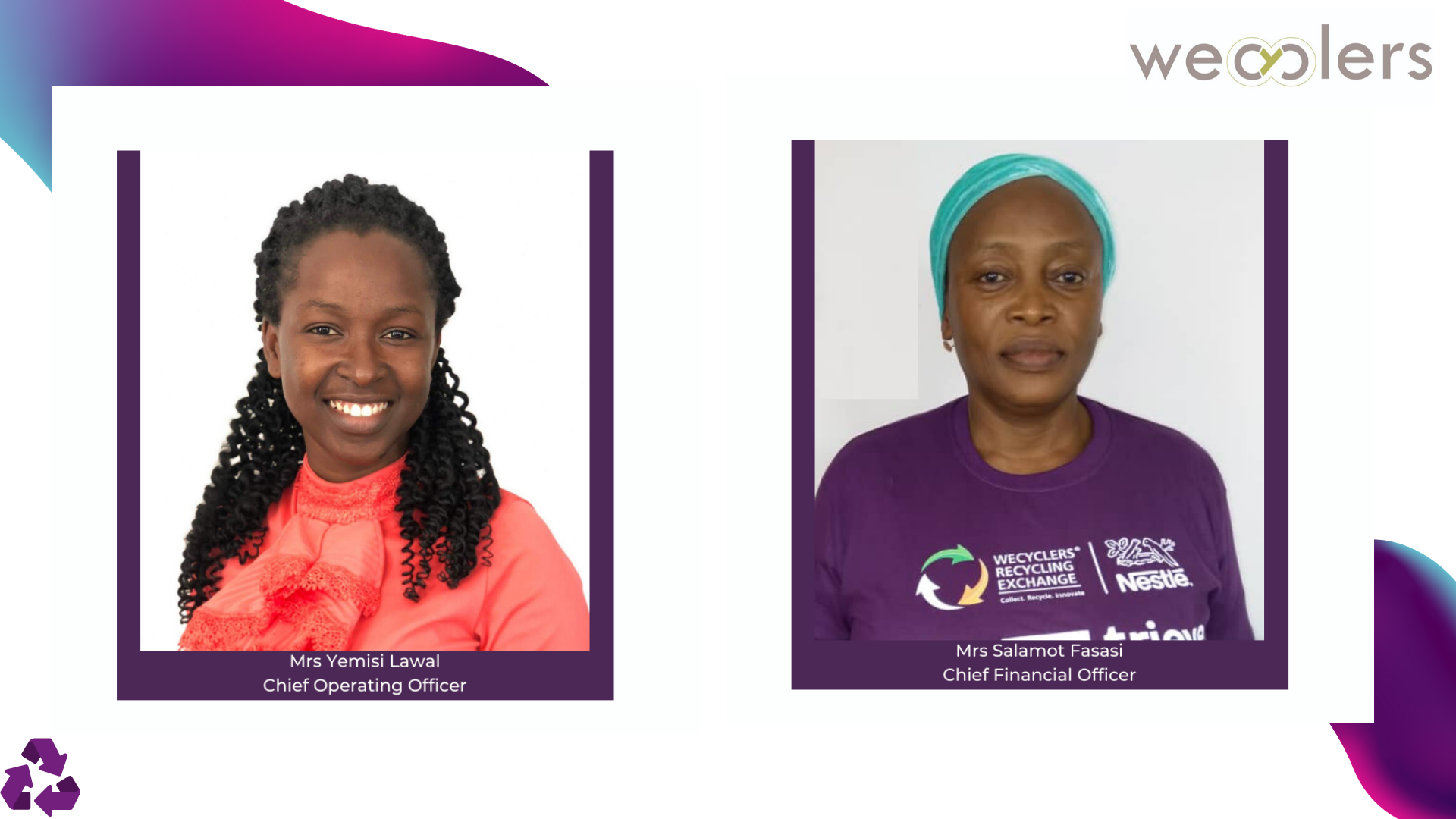
Yemisi Lawal appointed as COO and Salamot  Fasasi as CFO

LAGOS, Nigeria – 1 July 2020 – Nigeria’s pioneering waste recycling enterprise, Wecyclers Nigeria Limited has named Oluwayemisi Lawal and Salamot Fasasi as Chief Operating Officer and Chief Financial Officer respectively.

Mrs. Lawal previously served as head of HSE and Customer Engagement and Mrs. Fasasi held the role of Controller and Finance manager until her appointment. They will both assume the new role effectively July 1, 2020.

Yemisi Lawal, has 9 years of environmental management experience including the last 4 years at Wecyclers where she has led teams and various projects. She holds a Masters in Environmental Management from the University of Lagos and B.Sc. in Chemical Engineering from the Ladoke Akintola University of Technology.

Salamot Fasasi, has over 30 years of Finance experience and has served in various capacities at Wecyclers since joining in 2014. She holds an MBA in Marketing from the Lagos State University and Bachelors in Business Administration from the University of Lagos.

Speaking on these appointments, the CEO, Wecyclers, Olawale Adebiyi, expressed his confidence that the newly appointed CFO and COO will further, strengthen Wecyclers’ mission of empowering households through waste.

“These appointments demonstrate our commitment to nurturing talent and rewarding success. We have a deep pool of highly qualified and dedicated employees, who can be challenged with more responsibility in attaining our vision. We remain committed to diversity and inclusion and are delighted by the depth and quality of experience that this leadership team brings to Wecyclers. These appointments further indicate our internal succession capacity and I’m confident in the capacity they would bring on board”.

About Wecyclers

Wecyclers is a for-profit social enterprise that promotes environmental sustainability, socioeconomic development, and community health by providing convenient recycling services in densely populated urban neighborhoods using a fleet of low-cost cargo bikes. We give households a chance to generate value from their waste and provide a reliable supply of raw material to the local recycling industry. www.wecyclers.com


Featured

Starting an Office Recycling Program

As much as 90 percent of office waste in the average workplace can be recycled. Here’s how to get started.

Companies everywhere are ramping up efforts to go green, but sustainability starts with your employees. They’re the ones printing the sheets of paper and drinking from cans that often easily end up in the trash can, without much thought.
In the average workplace, about 80 to 90 percent of solid waste is actually recyclable, establishing an office recycling initiative won’t just reduce your carbon footprint, but it could also save your business money. Here’s how to get started.

Getting Started – Waste Audit

Ready to get up close and personal with the trash can? The first step to setting up an effective recycling program is to survey your workplace, and figure out exactly what’s going into the trash. Then, you can figure out which products are recyclable and which ones you want to include in your workplace recycling initiative. The easiest way to do this is by reaching out to us – Wecyclers, asking them exactly what they recycle and what they don’t.

Though up to 90 percent of office waste in the average workplace can be recycled, in the beginning, it generally makes sense to start small.

Paper products are a typical place to start. Beverage containers, too, are a no-brainer; most workers go through as many as 3 a day.

A few months after you launch your program, as employee participation and awareness increases, you can move onto other, larger recyclable objects, such as ink cartridges, computers, and other electronics.

Whatever you decide to recycle, you’ll need to appoint a coordinator – Recycling Champion to oversee and organize the program. This person should ideally be someone who is enthusiastic about sustainability and willing to help plan and see the entire recycling initiative through.

Encouraging Participation

Even if you’ve found the perfect program coordinator, a successful recycling initiative needs to come from the top down in order to motivate employees to participate. The most amount of success in corporate sustainability initiatives when they come from higher up as people tend to respond more strongly when it’s coming from the CEO, for example.”

Nailing the small details will go a long way in getting people to recycle. Be strategic about your placement of recycling bins. They need to go in places where the most trash is generated, like copy rooms, near printers, break rooms, and in cafeterias. They also need to be easily identifiable, with clear signage indicating they are for recyclable materials only. (Make sure to specify which material goes into which bin.)

Besides handy bins, another way to encourage employees to participate is consistent communication. Make sure every worker in the office is aware of the program and its goals. Track progress in public by counting up recycled materials, and let them know what they’ve helped to accomplish so far. You might even try adding incentives or rewards.

Training Staff

You can do everything you can to educate employees and make it easier for them to contribute, but don’t assume the rest of the parts you can’t see are going to do it the right way too.

It’s essential to reach out to your building management or your landlord to notify them of your recycling initiative, so they can make sure janitorial staff are on the same page. Your office complex might even already have a recycling program in place, making it easy to take advantage of what’s already available.

The potential for a successful recycling program balances on the employees who are producing office waste. You need an ongoing education program that lets them know the details of your program, and what they can and can’t recycle.

Arranging for Disposal

One of the most important parts of the process is deciding how to collect and dispose of the recyclables. There are many different types of paper products, like printer paper, magazines, cardboard, and construction paper. You can separate each specific type, which can make your recyclables more valuable if you’re disposing of them at a Wecyclers Recycling Exchange drop-off centre or a pickup by the Wecyclers team and could increase employee awareness about the specifics of recycling.

For businesses located in Lagos, Nigeria we offer recycling services and are responsible for waste disposal. For other businesses located out of our coverage area, contact whoever takes care of your waste to arrange for proper disposal and pickup of whatever materials you recycle, too.

You may have to hire an outside service. This will depend on the size of your company, as many commercial recyclers require a particular volume of waste that could be more than your company generates. Consider partnering with other companies, hiring smaller companies, or arranging to drop off recycling at drop-off centres.

Taking More Steps

Recycling programs are often only a smaller part of a broader workplace program to encourage sustainable business practices. Especially if you’re looking to save on costs, combining your recycling program with an effort to reduce office waste and reuse existing products can be a smart business strategy. When you’re auditing what goes into the garbage, you might realize that you’re wasting a lot of paper. Try to find tasks that could be paperless or products that could be reused.

Recycling, reducing, and reusing doesn’t have to stop in the workplace. Adding an extra dimension to the program definitely increases the overall awareness

Take action today, contact us founders@wecyclers.com to start recycling in your organisation.

October Editions

Wecyclers, Fair Plastic Alliance Host Stakeholders at the Plastic Waste Management Policy Workshop

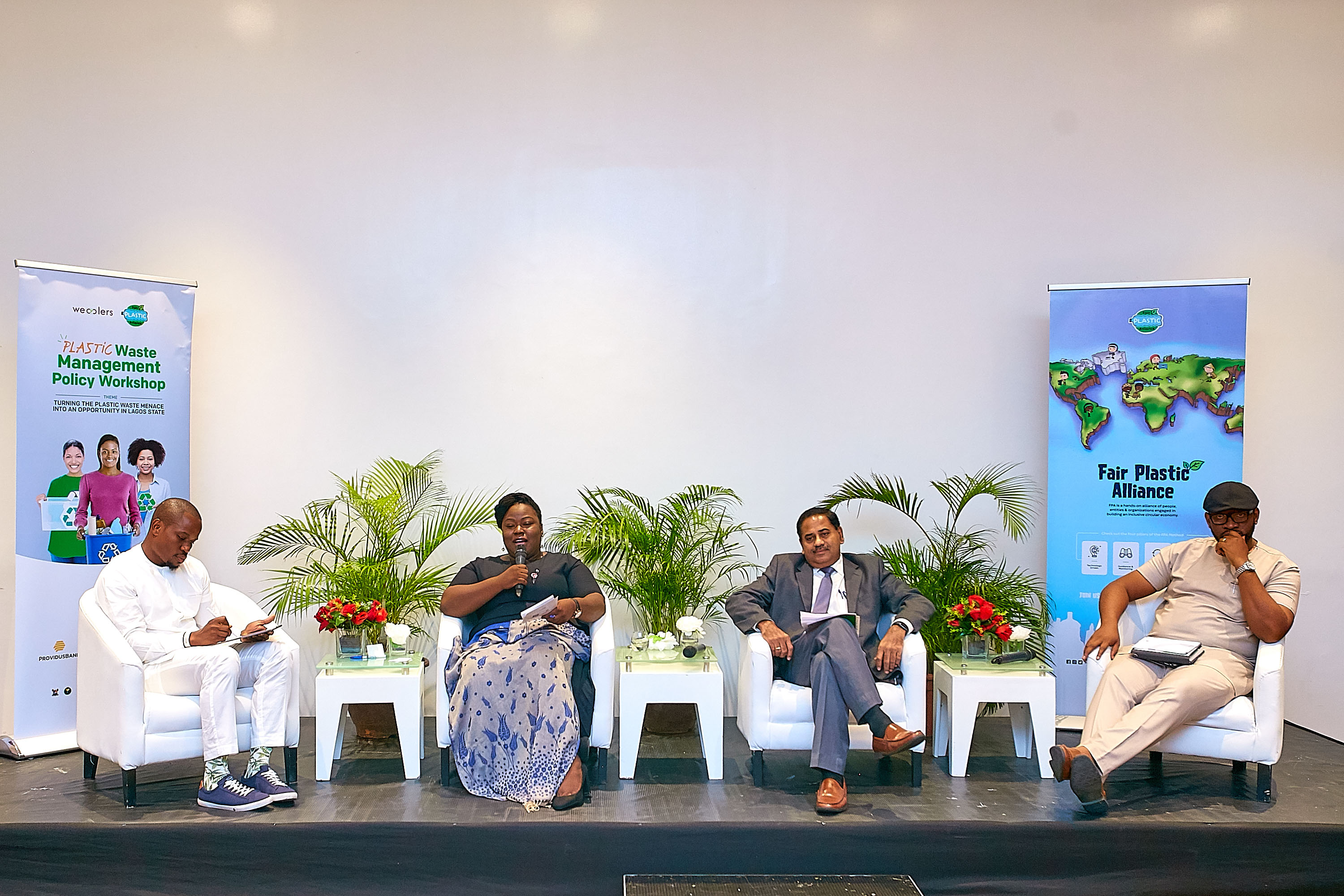
Panel session at the Waste Management Policy Workshop

LAGOS, Oct. 1 2019 — For sustainable solutions to unleash the positive potential of plastic waste in Lagos, policymakers must take into account the dramatic impact climate change is going to have.

Wecyclers and Fair Plastic Alliance Nigeria in partnership with The Lagos Waste Management Authority and The Lagos State Ministry of the Environment hosted the first Plastic Waste Management Policy Workshop in line with the Lagos State Governor’s T.H.E.M.E.S Agenda.

This workshop had as its key objective developing a set of procedures and goals, to be used in negotiation and decision making to guide a more detailed set of policies for plastic waste management in the state.

With several environmental professionals and scientists in attendance, there were all unanimous in the call over the menace of plastic waste and dangers poses to the aquatic wildlife, the environment, sustainable food production systems and ultimately, the human life. The workshop partcipants called for exploring available science and technologies, more research and development efforts on not only recycling but also the development of more environment-friendly biodegradable alternatives to plastic bottles.

Wecyclers CEO, Olawale Adebiyi in his remark shared that attaching a price value to recyclable plastics would encourage individuals, households and groups to keep their plastic waste properly, sell such to recycling companies is a key way to incentivize and encourage people which in turn will change mindsets and free the environment of recyclable waste deposits to a very large extent.

Similarly, Mr Oluwadamilola Emmanuel, General Manager, Lagos State Waterways Authority (LASWA), said the waterways in the state are loaded with undesirable materials that threaten the aquatic wildlife. The population and the metro lifestyles that encourage consumption of bottled water, soft drinks and other plastic packaging materials have increased the volume of plastic waste deposited in the waterways, he explained.

On the other hand, The Lagos State Government revealed plans to coordinate the waste management system in the state.

An Assistant Director from the Environmental Services Department, Ministry of the Environment and Water Resources, Mrs Tolulope Adeyo, speaking at the workshop said the government would rebrand resource managers (scavengers) and assign them areas across the state to assist in the waste sorting process.

On her part, Founder, Wecyclers, Mrs Bilikiss Adebiyi-Abiola, also admitted that apart from effects on the aquatic wildlife, the environment is deprived of necessary vegetation as the plastic materials on land retard proper vegetation. This, in turn, would affect farming, resilience building against climate change, and the need to beautify the environment for ecotourism.

Apart from recycling for bottle production, other products, as explained by BASF West Africa’s Director Dr Akintayo Adisa, is oil extract. He explained that because PET bottles are made from petroleum products, they could be recycled into oil that could serve various industry purposes using applied chemistry principles.

Dr Adisa disclosed that his organisition was moving to encourage individuals, households and groups to see plastic as a danger to the water body and earth surface, and hence should take advantage of getting empowered by disposing plastic waste responsibly.

In his closing remark, The Chief Executive Officer of  Wecyclers Nigeria Limited, Mr Olawale Adebiyi, called on the state government to develop policies that would encourage waste recycling and guarantee the sustainability of the management of plastic wastes in Lagos.

He said favourable government policies could attract both local and foreign investors in the management of the tons of wastes generated in Lagos State on a daily basis.

“We have already started seeing the effect of our bad disposal attitudes around us, the most noticeable of these is flooding, and this is why we at Wecyclers want to address this growing trend while also empowering some individuals involved in the value chain like those who are involved from the point of waste collection. We go as far as offering incentives to these individuals,” he said.

As a way forward, he suggested state and federal inter-agency collaboration to clean the waterways and preserve the aquatic environment and wildlife. The collaboration with recyclers, producers of plastic materials and other government agencies, he argued, would make the state and Nigeria as a whole clean of plastic deposits in the waterways.

Polyethylene terephthalate (PET) bottles and other plastic materials are not biodegradable. They remain un-degraded for over 200 years, thereby constituting a threat to soil fertility, environmental purity. They contaminate water bodies and escalate extinction of aquatic biodiversity.

Lagos State is described as the smallest in land mass but arguably the largest in population, is said to generate at least 13,000 metric tonnes of waste daily, and over 60 per cent of the waste is plastic, as disclosed by the Lagos State government agencies. However, the value of Lagos State plastic waste daily, by implication, is around N97.5 billion, apart from the waste flushed into the waterways and the oceans.

Hi-res imagery and other press assets available in the media kit via the link below:

CLICK HERE TO ACCESS

ABOUT WECYCLERS:
Wecyclers is a for-profit social enterprise that promotes environmental sustainability, socioeconomic development, and community health by providing convenient recycling services in densely populated urban neighborhoods. Visit www.wecyclers.com to learn more.

MEDIA CONTACT:
founders@wecyclers.com


Featured

Nestlé Nigeria and Wecylers to tackle Plastic waste pollution in Lagos

From Left: Regional Regulatory and Scientific Affairs Manager, Nestle CWAR, Mrs Kemisola Ajasa, Business Executive Officer,Nestle Waters Nigeria, Mr Rabie Issa, Managing Director/CEO, Nestle Nigeria Plc, Mr Mauricio Alarcon, Managing Director, Wecyclers, Mr Wale Adebiyi Head Business Development, Wecyclers, Mrs Omobolanle Olowu and Ms Victoria Uwadoka,Corporate Communications & Public Affairs Manager , Nestle Nigeria, at the Nestle Nigeria and Wecyclers Mou Signing in Lagos.

A Memorandum of Understanding (MoU) signed by Nestlé Nigeria Plc, a leading Food and Beverages Company, and WeCyclers on Friday will see no fewer than 15,000 Nigerians empowered through an extended plastic waste recovery system.

Wecyclers is a social enterprise that helps households in low-income communities capture value from their waste, to accelerate the process of recovering and recycling post-consumption plastic packaging waste in Lagos State.

At the signing in Lagos, Mr. Mauricio Alarcon, the Managing Director and Chief Executive  Officer of Nestlé Nigeria said: “ The agreement enables Wecyclers to extend plastics recovery systems to more communities.

“This is through the establishment of collection points across five more communities. The project will also help to create 40 direct jobs for collection point operators and sorters, and empower an additional 15,000 Wecyclers subscribers.

“It is estimated that 70 percent of all ocean litter is plastic and the quantity of plastic waste entering the natural environment harms wildlife and damages the ecosystem. The environmental impact is so enormous that the UN described it as a planetary crisis that is causing irreparable damage.

“In Nigeria, the problem is growing due to increasing usage and indiscriminate disposal of single-use plastics; we are witnessing a surge in plastic waste pollution’’.

According to Alarcon, Lagos alone produces about 10,000 metric tonnes of waste daily, most of which end up in landfills and waterways, exacerbating health and environmental hazards. He said that tackling plastic pollution is an urgent priority which requires a multi-sector collaboration.

“So, this MoU with Wecyclers is another step toward achieving our shared objectives of a waste-free future and building thriving communities. One of our ambitions at Nestle is to strive for zero environmental impact in our operations as we strive toward a waste-free future.

“A key part of achieving this goal is to make 100 percent of our packaging reusable or recyclable by 2025. And also, that none of our product packagings end up in landfills, litter environment, seas, oceans, and waterways’’.

Alarcon said: “In line with the belief that producers and consumers need to change behaviour and habits to manage the menace, Nestle is taking actions with industry members of Food & Beverage Recycling Alliance ( FBRA). This is to engage people, businesses, and consumers to play their part.’’


On his part, Mr. Olawale Adebiyi, the CEO of Wecyclers said: “This partnership is an avenue to extend the plastics collection and recycling process by setting up more collection sites across Lagos.

“These plastics have value and what we do is to assign value to them. When we weigh the amount of material these people will bring, we pay them for it; that will make them go out and find more.

“We on our own will sell the material, and the profit we will generate, we use to fund the process. It is basic; we are buying and selling plastics, but more sustainably, making sure that people are engaged,’’ he said.

According to him, the recycling exchange programme, since its inception in 2018, has diverted over 400 tonnes of plastic from landfills into productive reuse.

Adebiyi said that Wecyclers would handle the construction and deployment of each recycling kiosk, with coverage areas including Ajah, Ikeja, Mushin, Lagos Island, and Magodo.

July Editions

THE NEW NETWORK FOR FAIR AND SUSTAINABLE PLASTIC IS BORN

FAIR PLASTIC ALLIANCE:

Rome, 3/5/2019 – In the world, only 15% of the plastic produced is recycled. Every year, millions of tons of this material end up in the ocean, with disastrous consequences. Furthermore, countless informal workers in emerging countries operate in the recycling production chain under terrible conditions.

The Fair Plastic Alliance is born to tackle environmental and social challenge connected to the poor handling of the plastic recycling chain. Members of this alliance are Serioplast, leading international company in the sector of plastic packaging production for the major players on the global consumer market; Oxfam and CESVI, non-profit organizations that have been working for years on projects aimed at empowering capacity building among local communities and at bringing about economic and community development; WeCyclers, a Nigerian startup capable of implementing an innovative and scalable model to collect waste, which respects workers’ rights; and various cooperatives that unite informal collectors to offer more opportunities and a dignified lifestyle. The FPA brings together for-profit and non-profit international stakeholders, with a common goal: to develop a fair and inclusive production chain for plastic recycling, which offers men and women who operate in the informal waste collection sector the opportunity of having a fully recognized job and a dignified lifestyle.

“The Fair Plastic alliance wants to face the environmental and social issues generated by plastic through an innovative approach, leveraging on the active inclusion of informal pickers. This is possible when adopting a business model that brings workers back to the center. A model where investors give up on dividends and reinvests profits in the inclusion and development of local communities, thus guaranteeing economic, social, and environmental sustainability and giving an impulse for a bottom-up transformation, sustained and supported by the industrial production chain – says Delia Innocenti, Serioplast CEO.

“I have created WeCycliers firmly believing that lifting thousands of informal waste pickers out of poverty in my city, Lagos, would be a great thing for the air that we breathe, for health, and for labor dignity. – states Bilikiss Adebiyi Abiola, co-founder of WeCyclers. – Lagos, with its 25 million residents, suffers from chronic pollution from waste discarded anywhere on the streets, without any rules. Thanks to what we started, plastic here has become a resource that allows people to send their children to school, have a stable income, afford medical care”.

And it is precisely to the cooperative nature of the alliance that Benetta Gualandi, Programme Manager for Oxfam South Africa speaks, “We are experimenting with an innovative model to stimulate development based on the participation of basic communities, civil society, private sector and national and local government; a strong partnership, where each stakeholder acknowledges their role and puts their expertise and resources at everyone’s disposal”.

I am very proud to bring Cesvi on board this initiative” says Daniele Barbone, CEO of the Italian NGO. “President Gloria Zavatta and I have dedicated our careers to environmental sustainability. The Fair Plastic Alliance endorses Cesvi’s vocation towards environmental safety and proves that projects involving local populations have a cultural function as well. This is the direction we have taken with our partner Blue Sky Recycling, together with Serioplast, to create a Social Business for plastic waste collection and recycling in South Africa”.

The Fair Plastic alliance is open to all those who recognize themselves in its values and who want to adopt a business development model based on a fair and circular economy: companies, ONGs, cooperatives, associations and representatives of stakeholders in the plastic sector. The goal is to stimulate a debate that must involve multinational companies that use plastic for packaging, policy makers, local communities and consumers.

Read more:

www.fairplasticalliance.org

Oxfam Italy Press Office

Mariateresa Alvino – 348.9803541 – mariateresa.alvino@oxfam.it

David Mattesini – 349.4417723 – david.mattesini@oxfam.it


CESVI Press Office

Andrea Sicco: +39 347.2746274 – andreasicco@cesvi.org

Valentina Prati: +39 3280197962 – valentinaprati@cesvi.org


Serioplast Press Office

Tania Prestini +39 3381537683 – tania.prestini@serioplast.com


Featured

RecycleGO Helping Wecyclers to Solve Lagos Waste Crisis


RecycleGO is proud to announce its launch in Nigeria providing a customized scheduling solution to Wecyclers, a household recycling service in the capital city of Lagos. Using a fleet of low-cost cargo bikes, Wecyclers helps communities capture value from their waste. Lagos, the African continent’s most populous city, provides an ample proving ground for RecycleGO’s technology-based sustainability tracking and evaluation services as the company begins to expand beyond the US marketplace.

Lagos faces a sobering waste crisis that, if not properly addressed, will only worsen. The city’s population stands at 21 million people today and is projected to double within 30 years. The overburdened municipal government collects only 40% of city garbage and a mere 13% or recyclable materials are salvaged from landfills. People living in slum conditions without formal waste collection are subject to increased flooding, the spread of disease, and psychological stress that results from unmanaged trash heaps. Concurrently, recycling firms in Lagos face a supply constraint, as they cannot access an adequate supply of quality recyclable material to process. One large recycling firm is operating its facility at 50% to 60% below capacity. Wecyclers gives low-income communities in developing countries a chance to capture value from waste and to clean up their neighborhoods though incentive-based recycling.

RecycleGO’s location-based scheduling and tracking software will enable Wecyclers to operate more efficiently while providing the data analytics to continually improve recycling efforts. Wecyclers CEO Wale Adebiyi explains, “Wecyclers is excited to be in partnership with RecycleGO to drive positive change in the recycling space. We believe that in order to be successful in a challenging environment like Lagos, we have to employ cutting edge technology in our business and RecycleGO provides that. The location based tracking software will help us manage our fleet of WECYCLERS to ensure the most efficient and cost effective collection operation in the business.”

About RecycleGO

RecycleGO was founded in 2016 with a mission to provide sustainable recycling solutions that mutually benefit business and the environment. Founder and President/CEO Stan Chen brings over 20 years of experience in recycling and a vision to make a positive impact on the environment by using new innovations in the relatively tech-dormant recycling industry. Co-founder and CTO Jan Gerards has a deep background in project management, software system architecture design, and business consulting for enterprise-level software implementations.

Featured

King Baudouin Foundation awards 2018-19 African Development Prize to WeCyclers, a start-up leveraging the power of communities and generating impact by redistributing the benefits from recycled waste

 LAGOS, 21 March 2019 – The King Baudouin Foundation awards the African Development Prize to WeCyclers, a Lagos based waste management start-up. The Prize will allow WeCyclers to develop further their business and increase their impact at national and international level.


By 2100 Africa will account for 5 out of 10 biggest cities in the world, and Lagos could be the biggest city in the world. Today, Lagos residents generate 15,000 tons of waste per day, of which only 40% is collected by municipal government. WeCyclers’ model is designed to help fill this gap and reduce solid waste in the street of Lagos, improving both the environment and the wellbeing of populations.

The organisation utilises low and high technology solutions that comprise of a mobile application and SMS technology, as well as innovative low-cost bicycle-powered collection vehicles, which collect recyclable waste directly from households, to sell it on to recycling plants before it is made into new products. Households are sent an SMS by WeCyclers informing them of any “points” earned, which may be redeemed for food, household items and other goods.

“We are proud to grant WeCyclers for their unique model”, said Hervé Lisoir from the King Baudouin Foundation. “We selected the enterprise out of 200 applications for its innovative approach to engaging the community turning recycling into an economic driver for communities and turning citizens into agents of change.”

The company has also been selected for its economic impact. By rewarding citizens with “points”, it allows low-income communities to capture value from their waste, and redeem points for household goods, food items or cash aiding daily life. Today, the company already benefits from the engagement of over 17k subscribers in 7 localities in Lagos. It registers around 200 new members each month. The Nigerian start-up has also created 200 jobs in 7 years, with a focus on women, who currently account for 60% of their workforce.

“Giving back to the community is in the DNA of WeCyclers. We want to expand our business to other neighbourhoods. In the mid-term, we want to be big enough to build our own recycling plant. Growing more for WeCyclers, means being able to give back even more to the community, “declared Olawale Adebiyi, CEO of WeCylcers.

Since WeCyclers launched its initiative, awareness around the issue has risen among the general public, spurring several other companies to develop new solutions to recycling. WeCyclers have also recently partnered with major corporations, such as Unilever and Nigerian Bottling Company, to launch “kiosks” in places where there are no collection routes.

Through its financial support of €200,000, the Prize will allow WeCyclers to upscale their model and increase their footprint, with plans to expand in Lagos, other Nigerian cities and neighbouring countries. The Prize also provides access to a wide network of stakeholders in Europe and the US, who will support them as they grow. With current growth projections, WeCyclers aim to collect 5k tons of recyclables by 2020 and could be serving 500k households by 2023.

The biennial award ceremony in the presence of King Philippe and Queen Mathilde of Belgium at the Royal Palace in Brussels will take place June 12.

Media Contacts
For further information on opportunities for briefings and interviews with the winners, spokespeople and former laureates, please contact:
Graziella Chelo, Portland
graziella.chelo@portland-communications.com
+44 (0) 20 7554 1714 (direct)

For further information on attending the King Baudouin African Development Prize Ceremony, please contact:
Hervé Lisoir, King Baudouin Foundation
lisoir.h@kbs-frb.be
+32 2 549 02 23 (direct)

For images: Please find here images from the official King Baudouin Foundation Flickr account.

Further information

The King Baudouin Foundation
The King Baudouin Foundation is an independent public benefit foundation working in Belgium and at the European and international level. We are seeking to change society for the better, so we invest in inspiring projects and individuals. In 2018 we provided a total of €44.8 million in support to 2,350 organizations and individuals. The Foundation was set up in 1976, on the occasion of the 25th anniversary of King Baudouin’s reign. For more information, visit www.kbs-frb.be

About the King Baudouin African Development Prize
The aim of the King Baudouin African Development Prize is to acknowledge the work of African individuals or organisations which have made an exemplary contribution to development in Africa. It also seeks to draw public attention to the many inspirational stories of hope, struggle and success which emanate from the development field in Africa. For more information, visit www.kbprize.org
Previous Prize winners include:

Dr Denis Mukwege, Nobel Peace Prize Winner 2018, for his contribution to founding the Panzi Hospital in Eastern Democratic Republic of Congo, where tens of thousands of sexual violence victims were treated.
BarefootLaw Ltd for its work providing free-of-charge online legal service in East Africa to those most vulnerable to understand and defend their basic rights.
Farmerline Ltd for its work connecting over 200,000 farmers and enabling them to share information, helping some smallholder farmers grow their profits by 50 percent.
Kytabu Inc. for its work in developing an innovative textbook content-leasing app for students, making school reading accessible to 11-million students in Kenya.

July Editions

Wecyclers Engage Stakeholders at Makerspace Initiative Qatar

Nations around the world are engaging in conversations around Green economy and the roles stakeholders play in these. Wecyclers recently took part in the MAKERSPACE initiative Forum in Qatar.

MAKERSPACE initiative is an interactive space where the public can learn about green economy, business, and entrepreneurship in Qatar through exhibitions, workshops and talks. The two-day event is based on the concept of creative learning, where the attendees can learn about and become involved in sustainable practices. Because of its interactive and educational nature, MAKERSPACE initiative is open to children, entrepreneurs, and generally interested public alike.

Head, HSE and Customer Engagement of Wecyclers, Mrs. Yemisi Lawal representedWecyclers at the forum speaking on the Young Green Leaders Panel at the Makerspace Initiative, sharing insights into Recycling, investment in recycling and the Wecyclers Model.

Overall, the Makerspace project aims to:

Showcase how urban green entrepreneurship and business function as part of ongoing economic diversification in Qatar.

Create awareness for different stakeholders to become part of a dynamic urban green entrepreneurship ecosystem.