All Posts By

wecyclerseditor

September Editions

Recycling Aluminium Cans: Problems Associated With Improper Disposal of Aluminium Cans

By Ajibola Ameerah

Aluminium is a silvery-white, soft, non-magnetic ductile metal. It is the third most abundant element (after oxygen and silicon) in the Earth’s crust, and the most abundant metal there.

Aluminium cans

Aluminium cans

Aluminium cans are the most environmentally friendly and most recyclable type of container in the world. Aluminum cans allow the contents inside them to retain their taste, while protecting them from the negative impact of the elements. It is very durable and has a long life span. In addition, the can itself does not get rusty or lose its properties in any way. These are probably the most important reasons why aluminium is widely used for food packaging.

Aluminium recycling is the process by which scrap aluminium can be reused in products after its initial production. The process involves simply re-melting the metal, which is far less expensive and energy-intensive than creating new aluminium through the electrolysis of aluminium oxide (Al2O3), which must first be mined from bauxite ore and then refined.

It is very beneficial to recycle aluminium, recycling scrap aluminum requires only 5% of the energy used to make new aluminum, and in addition, 10 cubic yards of landfill space are saved for every ton of aluminium recycled. Recycled cans can be used to make furniture, airplane, appliances and more.

A major problem likely to occur from improper disposal of aluminium cans is environmental pollution. This comes from the fact that aluminium cans are non- biodegradable. This means that it takes a very long time for aluminium to be degraded and so, a lot of these cans end up in landfills or lay on the streets. Just like every other non-biodegradable material, it goes further to block drainage causing flood and gives rise to stagnant water which causes other health associated problems.

When aluminium cans are wasted, they must be replaced with new ones made from raw materials. Mining of these materials poses a great threat to the environment. Toxins are released into the soil and water when bauxite is mined and processed for refining into alumina. For every ton of aluminium produced, about 5 tons of caustic red mud wastes are produced along with a host of other pollutants including airborne emissions, toxic liquid effluents, etc.

The safety of man’s health in the environment is endangered due to the fact that once the environment is polluted, a lot of toxic waste are released which will result in respiratory diseases, poisoning, etc.

In the long run, we will be at the losing end when we fail to take proper care of our environment.

Don’t just throw your cans away, dispose them properly by supplying to appropriate waste management agencies.


CULLED FROM

https://en.wikipedia.org/wiki/Aluminium

http://www.aluminiumleader.com/application/packaging/#rec2548802

http://www.container-recycling.org/index.php/all-about-beverage-container-waste/62-issues/zero-waste/272-environmental-consequences-of-beverage-container-waste

https://en.wikipedia.org/wiki/Aluminium_recycling


September Editions

Impact of the Environment on the Economy

By Mofe Binitie

On the 25th of September, we joined the rest of the world to celebrate the World Maritime Day. In light of this, we sat down with the renowned Economic Policy maker, Dr. Obiageli Ezekwesili to discuss the relationship between environment and the economy.

Dr. Obiageli Ezekwesili

Dr. Obiageli Ezekwesili

Obiageli Ezekwesili is a distinguished chartered accountant. She was a co-founder of Transparency International, serving as one of the pioneer directors of the global anti-corruption body based in Berlin, Germany. She served as the Vice-President of the World Bank’s Africa division from May 2007 to May 2012. She was instrumental to the start of the viral #BringBackOurGirls campaign on social media, which trended internationally.


Mofe Binitie: We are really impressed with the work you did with Bring Back Our Girls. Considering that 500 days just passed. What are your thoughts?

Obiageli Ezekwesili: It’s a Tragedy of immense proportions that on day 511, our girls are still not back. Following their abduction on April 14th, I started off an advocacy the very next day. I would never have imagined it would take two weeks let alone a month to get the girls back. We cannot come to closure without recovering the girls as efforts can still achieve results; honest and true efforts. The parents, dads and moms continue to believe that we can get the girls back. 

M.B: Given the correlation between environmental degradation (Desertification) and extremism in some regions of the world (Niger & Mali). What role do you think a strong environmental policy would have played to prevent Boko Haram?

O.E: You cannot have sustainable development government without integrating everything about the ecosystem of the society whether in a literal or technical sense. In our development process, we must include everything that has to do with the efficient management of our resources and everything that constitutes part of our terrestrial environment. Many people in Africa assume that the issue of the environment is too sophisticated for Africa. This is wrong; you cannot tackle poverty without a mastery of the environment. As the African continent looks to its development, it must look to the dangers of environmental degradation and the effects of climate change such as desertification and flooding. Environmental degradation takes away the viability of the African environment as a place to generate value and livelihoods. We should be preventive in action. Climate change mitigation efforts are very important. Many countries have not invested or thought about investing the environmental conversation. The people paying the price for the inertia are the poor and vulnerable. They must be prepared for the changes that are coming and must be part of the solution. The capacity within African governments that will enable the anticipatory approval and climate change has not been gathered. The required investment required to develop a climate resilient economy has not been deployed. We are at a rudimentary level of facing the climate challenge.

M.B: Given the impact of desertification, rising ocean levels and global warming will have on the world’s poor, do you think multilateral agencies like the World Bank should concentrate more on financing green infrastructure rather than dams and power.

O.E: I don’t think you can answer that question in a binary way. Africa needs all the energy it can get to support its growth. The backbone of economic development is the availability of power. Africa needs to power the continent. However, it is clear that some power will be pricey in the long term such as coal plants. However, this should not overtake the conversation that Africa can generate enough power to be the backbone of its development. Africa needs to shape its own agenda, where it reduces the cost of development to the poor. The Climate change agenda for Africa should be part of the development agenda for Africa. Both agendas are inextricably linked. We must develop strategies for dealing with them in a composite manner. Africa should get in the driving seat of its development agenda, rank its priorities, identify its own resources and develop local solutions, lay out the gaps and then invite multilateral agencies to help fill those gaps. Every development solution is local and Africa must lead in the tackling of its problems.

M.B: You have quite a distinguished profile which spans the World Bank, a ministerial position with the Nigerian government and now a board seat with the Global Ocean Commission. What do you think Nigeria can do to be at the forefront of protecting our oceans and combatting desertification?

O.E: When the oceans are not properly managed, all the pollution will be done in the ocean. Which is what we happening to the ocean presently. The Ocean is critical to life, the poor in the coastal regions depend on the oceans for their livelihood. We see that illegal fishing, pollution and narcotic activities become disastrous for communities along the ocean. For Nigeria, as a coastal nation it needs to be a champion for the governance of the oceans. There is a common assumption that the high seas are a no man’s land, and everybody is free to do as they please. This is chaotic for the world. The last time a global consensus was reached regarding the oceans was decades ago. New challenges have come up since then, we need to address this and prevent a repeat of the poor governance of the terrestrial environment

M.B: A World Bank internal report criticized the bank’s resettlement policy for large scale infrastructure projects. Given such criticism concerning the bank’s effort to finance large scale infrastructure projects, do you think the bank would be better served collaborating with social enterprises like the Grameen bank to eradicate poverty?

O.E: You need a logistical backbone for development. The important thing is how to integrate the welfare of your local populace with development. Governments must provide their citizens with an economic sense of dignity. What is awful is to dislodge people from their homes for the sake of development. We can achieve the two goals simultaneously by ensuring we are building eco-friendly infrastructure while putting the community as the center of all infrastructure projects. While I was at the Bank, we did our best to promote these goals, we didn’t always get it right and we won’t always get it right but keeping in line with best practice and holding ourselves and governments accountable is important. It would be unfair to countries that need to reduce the cost of doing business. However to romanticize social enterprises as a solution Africa’s problems is wrong. They are not the solution to Africa’s infrastructure problems. We need build national capacities in way that won’t disturb the rights and dignities of the populace.

M.B: Thoughts on the African Investment Bank (AIB)

O.E: The more the merrier. Africa needs $93billion annually to meet its infrastructure needs. You don’t get too sophisticated and become useless. There is a huge need for infrastructure; the AIB will help fill this gap. Africa should try to get the best deal and maximise value. I’ve said to leaders that nobody has the right to determine the course of your development trajectory. Every other party should be a facilitator or partner. You define the goals of your program. We need to build strong and effective national system for identifying our problem. Some of the problems we do intuitively could be solved using a scientific method for collating and analysing data.

M.B: Do you consider yourself to be an environmentalist?

O.E: I’m a friend of the environmental. We must have a sustainable environment. If not we will destroy the future. We are stewards and stewardesses of the environment. Our children must not pay for our misdeeds. However I am a pragmatic friend of the environment. As custodians of the environment, we have to be conscious of the fact that we generate our livelihood from the environment. We cannot force on Africa principles that will negate its development. Africa cannot also afford to repeat the mistakes of the developed world. I believe in renewable energy. Africa’s hydro potentials are huge with the right approach it can supply a large part of Africa’s energy. Africa must develop an adaptation agenda that will help it become climate resilient. Pragmatism is called for.

Mofe Binitie

Mofe Binitie

This interview was conducted by Mofe Ibrahim Binitie.  Mofe Binitie has over a decade of experience volunteering for non-profits and start-ups. He is passionate about driving societal change through civic engagement. He is a consultant in a leading consulting firm and a World Economic Forum Global Shaper.

September Editions

THE INTERNATIONAL SOLID WASTE ASSOCIATION (ISWA) 2015 SUMMIT AND LESSONS FOR AFRICA AND THE WORLD

Press Conference on the Global Waste management outlook held during the ISWA 2015 conference

Press Conference on the Global Waste management outlook held during the ISWA 2015 conference

I was privileged to attend the 2015 ISWA conference held in Antwerp, Belgium from September 7th to 9th 2015. The theme of the summit was making the most of our resources and waste. It was a fantastic 3 days that exposed me to the wealth of opportunities in the solid waste sector.

At the summit, I learned from people like Phillip Heylen; Antwerp’s Vice Mayor for Culture, Economy and City Maintenance, Dr.Oyun Sanjaasuren; First President of the United Nations Environment Assembly, David Newman, the ISWA President and Dambisa Moyo; world renowned economist among many others.

With Phillip Heylen; Vice Mayor of Antwerp

With Phillip Heylen; Vice Mayor of Antwerp

Phillip Heylen talked about Antwerp’s approach to waste management as a form of urban mining. In Antwerp, waste is a resource. 71% of waste is pre-sorted at home and collected separately while 27% goes to incinerators and only 1% to landfills. In all, 1,000 people are employed in managing the 300,000 tons of waste generated by Antwerp annually. From tires to used oil and cardboard to dead animals, every type of waste is fastidiously collected and utilized and there is no waste. After all “it’s a waste to waste your waste”.

Dambisa Moyo spoke about why the problem of waste management is not prioritized worldwide. Over 1 billion people struggle to dispose of their waste around the world. These people deal daily with pollution, disease and lack of productivity due to unmanaged waste. The problem of waste management should be at the forefront; instead it is hardly prioritized and usually approached as an afterthought. Dambisa spoke about how poor waste management in developing countries enables richer more developed countries to dump their waste. She also management to economic development. Her quote “In Africa, its hard to talk to someone about the importance of a green growth agenda when people are trying to eke out a living” stuck with me and strongly supported the work we do at Wecyclers which is to provide low-income families with value from their waste.

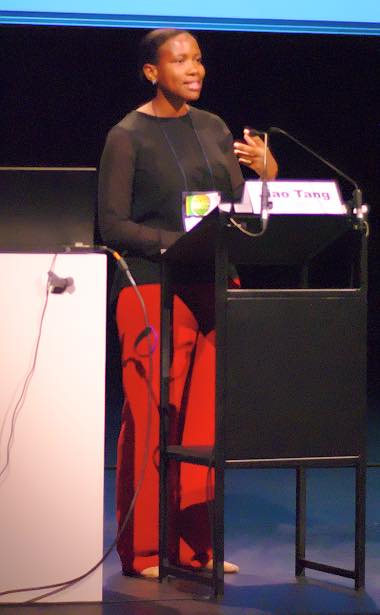
I participated in a panel organized by the ISWA Young Professionals Group (YPG) with people like Phillip Heylen; the vice mayor of Antwerp, Antonis Mavropoulos; CEO of D-WASTE and Anja Cheriakova; CEO Bin Bang. I shared the Wecyclers story and encouraged others to join us in the waste movement.

Lessons for Africa and the World:

  1. We need to prioritize waste management and view waste as a resource. Nothing should be wasted. The days of
    Speaking at the YPG Panel

    Speaking at the YPG Panel

    landfilling and indiscriminate dumping must be numbered;

  2. The waste management sector should be viewed as a strategic sector for economic development. Antwerp employs 1,000 people to manage 300,000 tons of waste produced annually. This means that the waste sector can easily employ at least 20,000 people in cities like Lagos. When mechanization is factored in, the amount of jobs created could easily be in the hundreds of thousands;
  3. Entrepreneurship in the waste sector should be encouraged;
  4. Strong policies and regulations promoting source separation of waste should be devised;
  5. Communication is key, everyone should know what waste management and recycling is and should be encouraged to do their part toward a clean and healthy environment.


I was struck by the big names that came to speak about their passion for waste management. Royalty, ministers, mayors and CEOs of large corporations all displayed how seriously cities like Antwerp and Europe as a

Speaking at the ISWA closing session

Speaking at the ISWA closing session

whole approach waste management. The conference was a great opportunity for me to learn about best practices in waste management and to network with other waste management practitioners. I was fortunate to meet people like Mrs. Margaret Dara Oshodi; the CEO of D Nigeria Limited, a member of the ISWA working group and a foremost player in the Lagos waste management sector.

I capped off the event by participating in the closing session along with other young players in the waste sector. We shared our impressions of the conference and gave participants some words of advice as they went back into the world.


August Editions

Emerging Waste Recycling Movements in Africa

Photo by Joan Bradeletti

Photo by Joan Bradeletti

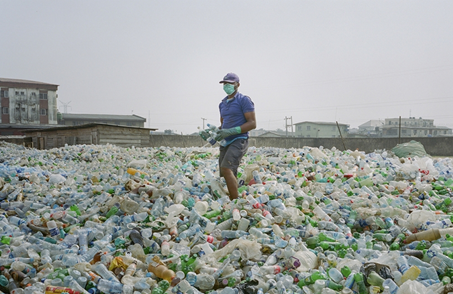
Around the world, uncollected trash is a very big problem and Africa is not left out in this. However, in the midst of this big problem, waste collection and recycling is a multi-billion dollar industry in developed countries. Africa as well, is picking up in this waste to wealth game, in this piece we highlight some of the players changing the game and setting the pace of recycling in Africa

According to the World Bank, Africa currently produces about 70 million tons of waste every year. A few smart Africans are already building wealth from waste and creating jobs for hundreds of Africans. The success of these inspiring entrepreneurs proves that there can be profitable business ideas in very unlikely and niche parts of African society. With its rapid urbanization and growing economies, waste production in Africa will exceed 160 million tons by the year 2025.

As the income and spending power of the average African continues to rise, more goods will be consumed leading to even more waste. Recent estimates place the average African individual waste generation at half a kilogram and businesses producing up to two kilograms of waste every single day! However, the amount of waste generated on the continent is estimated to grow very fast over the coming years.

With several opportunities ranging from waste collection, inorganic waste processing and organic waste processing, these recycling movements have shown the huge potential in Africa’s large and growing waste market. We highlight some of these movements leading the waste to wealth revolution in Africa, changing the game and setting the pace of recycling in Africa.


Collect-a-Can, South AfricaCOLLECT A CAN

Collect-a-Can (Pty) Ltd is a South Africa based can recovery and recycling organization. It is a joint venture between Arcelor Mittal South Africa and Nampak.

For over two decades, Collect-a-Can has been at the forefront of minimizing the negative impact of used metal cans on the environment through the recovery of all types of used metal cans.

They are a recovery as opposed to a profit-driven company, and have proven that they are self-sustainable by managing their operations and cost structures at optimum levels for over 22 years, assuring the respective southern African governments, environmentalists and the public of their long-term stability.

Since Collect-a-Can started, southern Africa’s used can recovery rate has improved from 18% to 72%. Currently, metal cans form less than 1% of the total rubbish that ends up in landfills due to their value and recyclability. Collect-a-Can prides itself as a community based initiative. They work actively within various communities, encouraging citizens from all walks of life to assist them in their can collecting efforts.Their ‘Cash for Cans’ initiative encourages cans to be collected and sold to Collect-a-Can for cash, because they know that recovery and recycling aids job creation in many communities and creates an additional source of income for schools, non-governmental organizations, and other community groups. This initiative safeguards the livelihood of thousands of unemployed South Africans and allows community development across the southern African region.


YELI, UgandaYELI

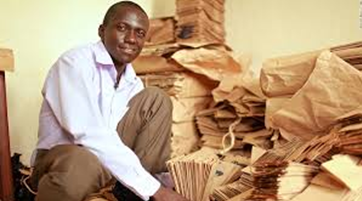
Andrew Mupuya founded YELI, Uganda’s first paper bag production company. He got the idea to start this business in 2008, when the Ugandan government put a ban on the use of plastic bags in order to reduce the environmental damage it was causing.

To start the paper production business on a small scale, Andrew figured out he needed about 36,000 Ugandan shillings ($14). He raised $11 from selling 70 kilos of used plastic bottles and then borrowed the remaining $3 from his school teacher.

Andrew taught himself to make paper bags by watching videos on the internet. Today, Andrew’s paper bag company now employs over 20 people and produces more than 20,000 paper bags every week. All the bags are produced by hand as Andrew cannot yet afford a machine.

His long list of clients includes restaurants, retail stores, supermarkets, medical centers, as well as multinational companies like Samsung. His company, YELI, has made about 1,000 niche bags for the local stores of the electronics company.‎

Sources:

http://www.smallstarter.com/get-inspired/africa-top-5-entrepreneurs-in-the-waste-recycling-business

http://www.collectacan.co.za/index.php/about-us


August Editions

Recycling Glass… Why should I?

Glass

Glass makes up a large component of household and industrial waste due to its weight and density. The glass component in municipal waste is usually made up of bottles, broken glassware, light bulbs and other items.

Glass is made from liquid sand. It is be made by heating ordinary sand (mostly made of silicon dioxide) until it melts and turns into a liquid. Sand melts at a very high temperature about 17000C. Other minerals such as lime, soda ash and some other additives are added to make glass.

HOW TO RECYCLE GLASS.

Glass recycling is the process of turning waste glass into useable products. It is one of the many ways we can help reduce pollution and waste. Every day, we throw away tones of rubbish and glass is a significant part of it.

Glass can be melted down and made into many different forms from drinking glasses to glass fiber. When the glass is taken to a manufacturing or recycling plant, it is broken up into smaller pieces called cullets.

The broken pieces are crushed, sorted, cleaned, and prepared to be mixed with other raw materials like soda ash and sand. The raw materials and glass pieces are melted in a furnace and then shaped into moulds to make new bottles of different colours and sizes. New recycled bottles and jars are made in this way.

In countries like USA, there are kerbside recycling schemes, which have specially demarcated boxes to collect glass that can be recycled. Some supermarkets, car parks and other public areas have glass bottle banks, where you can take your recyclable jars and bottles.

The benefits of recycling glass are numerous. Apart from the fact that it uses less energy compared to when the glass is manufactured from the beginning, it also prevents glass from piling up in landfills that are a threat to safety. Glass produced from recycled glass reduces pollution into the environment by reducing air pollution by 20% and related water pollution by 50%.

Every metric ton (1,000 kg) of waste glass recycled into new items saves 315 kilograms (694 lb) of carbon dioxide from being released into the atmosphere during the creation of new glass.

Recycled glass can be made back into its former state or it can be recycled to produce new glass items. Glass do not degrade during the recycling process so it can be used again and again

Culled from:

wwf.panda.org/about_our_earth/teacher_resources/project_ideas/recycling_glass/

https://en.wikipedia.org/wiki/Glass_recycling

www.recyclenow.com/facts-figures/how-it-recycled/glass-bottles


August Editions

Youth Impact on the Environment

By Lawani Akinyemi

Mrs. Cynthia Saka, CEO, T. Cynthia Nigeria Ltd

Mrs. Cynthia Saka, CEO, T. Cynthia Nigeria Ltd

In light of World Youth Day  (a UN International Day) on August 12, this month Wecyclers looked into the impact of the youth on the environment. We sat down earlier this month with Mrs. Cynthia Saka, a waste management and recycling entrepreneur, to discuss this intersection of the youth and the environment and to get her thoughts and insights on this important issue.

Mrs. Cynthia Saka is the Chief Executive Officer of T. Cynthia Nigeria Limited. The company T.Cynthia Nigeria Limited started in 1989 as T.Cynthia Nigeria Enterprise, dealing mainly in cotton wools, caustic Soda and the supply of both industrial and petro-chemicals to companies such as: “33” now Consolidated Breweries, Ijebu-Ode, Ragolis Waters in Ikorodu, Beecham and Glaxo amongst others. With her vast knowledge and experience, she is going to be illuminating us in this interview on the impacts of the youth on the environment.

Lawani Akinyemi: How did you get involved in recycling and waste management?

I have been in the Industry for about 26 years. Initially I started with cotton in a textile company and in most textile companies’ plastic waste is easily generated. We would pick up the waste and send it to the grinding house as a result of that we gradually moved into reprocessing.

LA: The Nigerian Bureau of statistics put the current youth unemployment rate at 54%. How do you think the Nigerian waste and recycling sector can reduce unemployment rate among the youth and Nigeria as a whole?

In order to reduce the nation’s unemployment rate among the youth, the Government must first of all educate and empower them so as to encourage entrepreneurship and self-dependency. This will not only empower the youths but also boost the country’s economy.

 LA: What strategies can the government and the private sector employ to reach youth who lack knowledge about recycling to teach them about its importance and combat the general ignorance about recycling that plagues the youth population in Nigeria today?

The government should create an avenue for seminars and workshops with the aim of enlightening the youth on the merits of environmental protection.

LA: From your experience in the recycling and waste management industry with your company, T. Cynthia Enterprise, what advice do you have for youth who are interested in starting up a company without much capital and probably no experience?

My advice to them is to start gradually and shun the habit of collecting loans from commercial banks that attract high interest. However, if the government can provide those loans with little or no interest it will go a long way in assisting them.

 LA: Nigeria’s median age is 18.2 years old and approximately 43% of the population is under 15 years old.  How does that affect the country and its economy as well as political prospects in the entrepreneurship field?

It affects the country greatly because, the youth are not well educated and lack proper facilities.

LA: What is the biggest problem today in regards to youth/youth unemployment in Nigeria?

There are not enough jobs for youth. Even the available jobs cannot be giving to them because of their apathy towards working. This is a technological generation that encourages laziness. Therefore job opportunities cannot be awarded to undeserving candidates.

LA: Any final comment?

The youth have a great effect on the environment so, the government has to do all in its power to enlighten them with the use of vocational trainings and not “white collar” jobs. The government should invest in Nigeria by providing facilities to empower them.

Lawani Akinyemi

Lawani Akinyemi

This interview was conducted by Lawani Akinyemi, a summer intern at Wecyclers. He is currently pursuing his Bachelor Degree in Mass Communication at Bowen University Iwo, Osun state. 


July Editions

How Population Growth Impacts the Environment

By Jordan Ricker

In light of World Population Day (a UN International Day) on July 11, this month Wecyclers looks into how population growth affects the environment. Jordan Ricker of Wecyclers sat down with Dr. Victor Fodeke, an expert on waste management and environmental issues, to discuss how population impacts the environment.

Dr FodekeDr. Victor Fodeke

Dr. Fodeke is a Humphrey Fellow (1988), and an Ashoka Fellow (1997). Dr. Fodeke founded the African Environmental Action Network in Nigeria, which trains recent graduates on community organization and sensitizes them to environmental issues and opportunities for action. In 2008 he was appointed as the Head of the Special Climate Change Unit in the Federal Ministry of Environment in Nigeria, and since 2011 Dr. Fodeke has been a consultant for the African Development Bank as well as an Adviser to the African Union.

Jordan Ricker (JR): How did you first get involved with waste management? 

Dr. Fodeke: My career in the environment started in 1980, but my experience with recycling didn’t emerge until nearly a decade later. I had been working with the Environment Unit in the Ministry of Environment when we had an incident with eco-waste in 1988. We had 4,000 tons of toxic waste brought into Nigeria from Italy. We managed to get the assistance of the U.S. Embassy and one of the expats from the EPA (Environmental Protection Agency) trained Nigerians to repackage toxic waste and return it back to Italy. From this experience, I went on to learn about waste management in Seattle, Washington. I was there when the first experiments on waste recycling started at the University of Washington in 1988.

JR: Lagos is the biggest city in Nigeria and the biggest city in all of Africa with an estimated population of 18-21 million people. What effects does this massive amount of people have on the environment in Lagos?

Dr. Fodeke: When you think about a population, you have to look at the ecological resources you have. When the population’s demands on its ecosystem are beyond the carrying capacity of that system, there will be a catastrophe. To give an example, during my Master’s research I was looking at the microbial and heavy metal content in the Lagos Lagoon and discovered that the lagoon basically serves as a depot for untreated industrial effluent that is simply dumped there.

This is just part of the huge waste that is generated in Lagos that is an eyesore to all the city’s inhabitants and unless something is done very quickly to address the issue, there will be an ecological catastrophe. One way to do this is to borrow the waste management model of Seattle, in which the city decided to recycle 60% of their waste in five years (and ended up doing it in three).

JR: So in contrast to Lagos, what is the interplay between the population and the environment in smaller cities in Africa, such as Abuja, Nigeria (approx. 2 million) or Dakar, Senegal (approx. 6 million)?

Dr. Fodeke: No matter the population, it’s important to look at the correlation between population rise and what is being produced against the carrying capacity of that specific ecosystem. No matter the type of waste (air pollutants, solid waste, etc.), they all have to take into account the carrying capacity of the ecosystem. I think one of the main problems is the perception of waste. Waste should not been seen as a nuisance, but as a valuable resource. We’re wasting our waste. In countries across the world, like Sweden, the waste generated there is used for electricity. In other places, waste is not treated as something to be discarded, but as something that can be utilized for reducing, reusing, and recycling. Recycling is a cash cow in Canada and the United States that creates thousands of jobs every year. In Nigeria, we need to see waste as a resource to be utilized and understand that waste can bring wealth!

JR: Going back to Lagos, Nigeria, the World Bank estimates that the population of Lagos will grow at a rate of 5.8% per year to 35 million people by 2025. Will Lagos be able to sustain a population bigger than that of Beijing, China, without suffering serious environmental effects?

Dr. Fodeke: Long range planning is the key to addressing pernicious environmental effects. If Lagos state, and Nigeria in general, already have estimates for the population in 2025, then what is left is utilizing that data to create plans and policies that will be able to address the predicted negative environmental effects of population growth. If Lagos State implemented short, medium, and long range planning on the problems of physical infrastructure, handling pollution, food production, etc., they could seriously reduce the number of issues facing the state government. All of these plans can only be put in place with a lot of information from the get-go. However, the problem is that most administrations don’t plan either before or beyond their four years in office. If you fail to plan, then you are planning to fail.

JR: In the same vein as planning, many people talk about places such as the Nordic countries and Switzerland as being shining examples of environmental policy, waste management, and recycling, often attributed to their excellent foresight of these issues. However, all of these countries have very little or even negative population growth. How does negligible population growth and small population size factor in with a good environmental track record?

Dr. Fodeke: One of the crucial factors in planning is access to data and information. We don’t have the culture of quantitative and qualitative data here in Nigeria. You need to have quality control and data management as the very foundation of your planning and in Nigeria, you cannot rely on that information. Unless there are programs created for data acquisition and management or the establishment of a Bureau of Statistics that can help to generate data for effective implementation, the method of getting these data is not readily or accurately available. The Nordic countries and those like them that have excellent waste management policies in place have a lot of data and they actually use it. For example, they know the birth rates and the death rates of their citizens to a very precise degree. By contrast, those numbers are just general estimates in Nigeria. When you fail to have data at your fingertips then you cannot plan. You are going to head into disaster.

JR: Speaking of data, let me throw some at you. In general trends, while world population growth has decreased from 2% overall in the 1960s to hover around 1.1% in 2015, the world population size itself has drastically increased from approximately 3 billion in 1960 to more than two times that, around 7.3billion in 2015. Considering the sheer amount of people that are now alive, what needs to be done right now to curb environmental degradation? And for Lagos in particular, with a growth rate nearly five times the global average, what needs to be done?

Dr. Fodeke: When I think of best practices, I keep going back to my experiences in Seattle. They made it a state law that 60% of what people living in Seattle generated as waste needed to be recycled within five years. Additionally, state residents had to pay for as much waste as they generated. This example of successful waste management came from recycling being an enforced law that made economic sense. Once people were forced by the government to pay for the amount of waste they were responsible for, they immediately generated less, which saved individuals money and immediately implemented recycling. The city of Seattle can be a microcosm for Lagos, which should be a microcosm for all of Nigeria. The template of Seattle, which redefines waste management as focusing on reducing waste from the source, is applicable no matter a city’s population size and is the best way to effectively address the immense waste problem that the world currently faces.

JR: With the new federal government in Nigeria and state government in Lagos, what are some pieces of advice that you have for President Mohammadu Buhari and Governor Akinwunmi Ambode on environmental legislation?

Dr. Fodeke: First of all, there needs to be environmental laws in this country. The federal, state, and local government need to work together throughout all levels and ensure the laws are followed-through with impact assessment. Secondly, we must start to see the environment as what has been given to us by our parents and what we will give to our children. The new administration has to create policies backed by legislation that is focused on using the environment and protecting it. The laws created must also be practical and enforceable, not draconian; otherwise they will create more problems than they solve. Furthermore, it pays to go green these days – it creates jobs and saves money in both the short and long run. Lastly, from an ethical perspective, people don’t deserve this environment. Human beings deserve to live in an environment that is beneficial to their health, not detrimental to it. The job of the government is to work for the good of the people and one of the basic conditions of that public good is guaranteeing a healthy and clean environment for citizens.

JR: Now let’s look to the future. In examining countries with rising population growth that will be major political and economic powerhouses in the next generation, such as Nigeria, Brazil, and India, what do you suggest these countries do in planning for the environment’s future with the knowledge that their already vast populations will be increasing at such dramatic rates?

Dr. Fodeke: I think one of the key players in planning good environmental policy is the type of government a state has. Democracy is very good in terms of being proactive in enforcing policies. While some of these countries with very large populations are democratic, others are not. In democratic countries, you tend to see more of an environmental bent in discussions of population management. However, a noticeable exception of environmentally conscious policy coming from a democratic country is China. The pollution in China is not so good but China is currently working to correct that. That’s what happens when economic policies are put in place to consider the environment. In the end, it’s about the choices that people make every day about what kind of environment they want to live in and how their choices align or disjoin with that goal.

JR: Do you have any last comments you would like to share?

Dr. Fodeke: What I want to see more than anything else is an international workshop on waste management that look at strategies for Nigeria and discusses how to tackle this problem head-on. I hope this international workshop comes from the National Assembly and the relevant ministries working together to make this happen. Nigeria is a ticking time bomb of eco-catastrophe, but if we address the problem now, we can prevent that catastrophe from ever occurring.

Jordan Ricker


This interview with Dr. Victor Fodeke was conducted by Jordan Ricker, a summer intern with Wecyclers. Jordan is a U.S. American who is currently pursing his undergraduate degree at Franklin University Switzerland in Lugano, Switzerland. He is passionate about both the field of social entrepreneurship and environmental conscientiousness and has found the perfect mesh of the two at Wecyclers.
Continue Reading

August Editions

Wecyclers Cleanup Day

wecyclers134

Join us as we keep fit cleaning up the community by promoting recycling in Lagos communities.

Click here to Register

Others
The Boat dock at Victoria Island on Ozumba Mbadiwe across the street from the Law School. Lagos
Saturday, September 05, 2015
10:00 AM ‐ 02:00 PM
08120094324
July Editions

Are Dry Cleaning Bags Recyclable?

By Ebube Okechukwu

Over the past couple of weeks, we have shared information on several recyclable materials that are not commonly known via our social media platforms. Another material that falls in this category is plastic dry cleaning bags.

Drycleaning BagRecyclable dry cleaning bags in a row

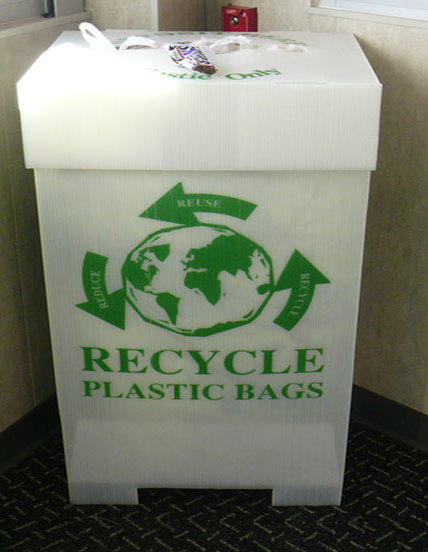
Every time you go to the dry cleaners, your clothes come back to you wrapped in a huge swath of plastic. And, if you are a dedicated recycler or environmentalist, that probably bothers you a little. What are you supposed to do with that plastic sheet once your clothes arrive home?

There’s good news! Most plastic dry cleaning bags are recyclable. Now that you have some basic knowledge of these plastic clothes coverings, let’s look at some more detailed information about these bags.

What are dry cleaning bags made of?
Dry cleaning bags are made with low-density polyethylene, commonly abbreviated as LDPE. This particular type of thin, clear plastic is known as “film” to those in the know in the recycling industry.

RecyclableLDPERecyclable LDPE

Low-density polyethylene (or LDPE) is used for many other types of film, including plastic shopping bags and trash bags.

Why should I recycle dry cleaning bags?
Dry cleaning bags, like anything else made from plastic, are not biodegradable. That means they will sit in landfills – forever. With the ever-increasing demand for dry cleaning around the world, even these small bags add up to be detrimental to Mother Earth.

There are many other reasons to keep dry cleaning bags out of your garbage can. Plastic is a petroleum-based product so recycling dry cleaning bags actually reduces petroleum use. The bags also contain numerous toxic chemicals, including dioxins, which are released into the air if the plastic is incinerated.

Additionally, dry cleaning bags and other types of film plastic are a real nuisance in the waste stream. The wind catches them easily, so they have a tendency to escape trashcans or piles and create litter on highways and in transfer stations. Film plastic can get caught in recycling machinery, which damages equipment and stalls operations at recycling centers. If that plastic finds its way into the ocean, marine life and birds can eat it, mistaking the bag for food, or get tangled in the folds of the plastic. Finding ways to responsibly recycle the film is beneficial for both the environment and recycling companies.

Recycled dry cleaning bags can be found in furniture, tiles, garbage bags, trashcans, and much more. Recycling plastics uses substantially less energy and produces far fewer environmental toxins then creating new plastic altogether, so it is important to spread the word that dry cleaning bags and other plastic films can be recycled.

As a last reminder, remember that before placing dry-cleaning bags in any type of recycling bin, make sure you have removed all other potential contaminants, including hangers and receipts. Happy recycling!

Culled from:

Bennett, Sophia. “How to Recycle Dry-Cleaning Bags.” Recycle Nation. November 18, 2014. Accessed July 27, 2015. http://recyclenation.com/2014/11/recycle-dry-cleaning-bags

Giller, Chip, and Catharine Wroth. “7 items you didn’t know you could recycle.” Today.com. November 6, 2007. Accessed July 28, 2015. http://www.today.com/id/21642033/ns/today-green/t/items-you-didnt-know-you-could-recycle

Iggyaa, “How to Recycle Plastic Bags, Dry Cleaning Bags, Shrink Wrap.” GreenLifeStyleChanges.com. December 27, 2011. Accessed July 28, 2015. http://www.greenlifestylechanges.com/how-to-recycle-plastic-bags-dry-cleaning-bags-shrink-wrap/