All Posts By

wecyclerseditor

July Editions

Wecyclers, DHL and Leadway Assurance introduces recycling to 3 cities with #Clean9ja

by Ebube Okechukwu

Hundreds of volunteers and scores of residents came out in Ota, Ibadan and Lagos to clean the environment as part of an effort to drive a cleaner Nigeria and promote recycling. Clean9ja, which is an offshoot of #LetsCleanupLagos which started in 2015, is a response to the growing concerns of increase in waste and a further decrease in awareness creation about the benefits of a clean environment and on recycling. #Clean9ja campaign works to enlighten Nigerians on the importance of a clean environment and the benefits of recycling

IMG_9250The March clean9ja day is the fifth in the series of the campaign for a cleaner environment. The cleanup exercise which debuted in September, 2015 had the full support of global market leader in the logistics industry, DHL and insurance giants, Leadway Assurance. In attendance were several volunteers, community members, representative of organizations including Mrs. Bilikiss Adebiyi-Abiola, Founder, Wecyclers; Boluwaji Oyewumi, Head of Business Development, Wecyclers; Babajide Fadoju, SA to the Governor of Oyo State on New Media; Irebami Taiwo; Gideon Olanrewaju, Executive Director, Areai; Members of the World Economic Forum Global Shapers in Ibadan, LAWMA, Oyo State Ministry of the Environment and the Oyo State Solid Waste Management Agency.

This months’ cleanup exercise which held in Ilashe Beach, Lagos; Akingbola Street, Bodija-Ibadan, Oyo state and Oju-Ore Area, Sango Ota, Ogun State brought together youths and community groups including the Global Shapers Ibadan served as a platform for networking and engagement on the overall benefits and the need to drive awareness on the importance of caring for the environment.

“Waste burden seems like an increasing problem globally, while we can decide to complain about this we felt there is also a part to play by creating awareness and driving the conversation on a clean Nigeria, this month we thought to do it better by taking it to other cities/states and also to a beach; Ilashe in Lagos” Bilikiss Adebiyi-Abiola said.

IMG_9239

On Wecyclers role in promoting recycling Mrs Adebiyi-Abiola said; “We face a sobering waste crisis that will only worsen as population continues to soar. The government and its mercenaries have become overburdened and can only collect just a certain percentage of the daily waste produced.

People living in slum conditions without formal waste collection are subject to increased flooding, disease spread, and psychological stress that results from unmanaged trash heaps. Concurrently, recycling firms in Lagos face a supply constraint—they cannot access adequate supply of quality materials required for processing. One of the large recycling firms in the country is operating its factory at 50 to 60% below capacity. We recognized this and introduced our model which to a considerable extent solves the urban waste challenge for households and recyclers.

We motivate families to recycle plastic bottles, plastic sachets, and aluminum cans through our SMS-based incentive program. For every kilogram of material that families recycle with us, they receive redeemable Wecyclers’ points over their cell phones in return. Families can then redeem their points for goods that they value, such as cell phone minutes, basic food items, and household goods. Families receive collection reminders and rewards updates directly on their mobile phones making the benefits of recycling immediate.

IMG_9167

The Cleanup day is one of the avenues we have created to promote recycling and as well drive the need to clean up our environment.”

In a recent report by the Ellen MacArthur Foundation, the world’s oceans may have more plastic debris than fish by the year 2050. Currently, 8 million tonnes of plastic end up in the ocean each year – the equivalent of a dump truck of plastic rubbish every minute.

At current rates, that will have grown to two trucks a minute by 2030, and four a minute by 2050 – by which time, by weight, there will be as much plastic in the oceans as fish. There remains a huge need to drive awareness on a cleaner society and promote recycling.

Although the cleanup day is targeted at communities, hundreds of volunteers have embraced this initiative as an essential part of enlightening and participation for cleanliness in the society.

Speaking shortly after the exercise, Babajide Fadoju, “This for me and other volunteers is an opportunity to do something for the environment. We can do our part in a bid to help reduce the waste burden in Ibadan”.

For more information about what Wecyclers is doing or to arrange to interview, please email founders@wecyclers.com

October Editions

Recycling E-Waste

e waste

Electronic waste, or e-waste, is a term for electronic products that have become unwanted, non-working or obsolete, and have essentially reached the end of their useful life. Because technology advances at such a high rate, many electronic devices become “trash” after a few short years of use. Thus, computers, cell phones, radio sets, refrigerators etc constitute e-waste. These items produce complicated multi-material waste with different proportions of metals, plastics and glass. They can be polluting if they are not adequately treated before disposal.

With the high demand for these electronic products Nigeria has literally been turned into an international dump site for all manner of electronic junk. A certain report published by the U.S. – based “San Diego Tribune” newspaper on December 2, 2005 reveals that up to 80 percent of electronic waste generated in the United States meant for recycling is quietly exported to other countries. These include some 350 million computers in use in the U.S. which are fast becoming obsolete.

Obsolete electronic devices are rapidly filling landfills across the globe. In the US alone, more than 100 million computers are thrown away with less than 20% being recycled properly. The EPA estimates as much as 60 million metric tons enter landfills every year.

But these products are not entirely useless as several parts can be recycled to very useful products. A recent report by Aljazeera which spotlights a Bolivian teenager turning e-waste into robots supports this and  Kodjo Afate Gnikou, a resourceful inventor from Togo in West Africa, has made a $100 3D printer which he constructed from parts he scrounged from broken scanners, computers, printers and other e-waste.

e waste

What then is the proper way to recycle e-Waste?

Solving the e-waste problem starts with education, and habit changes as a result of knowledge. Most people are trained to recycle a newspaper, bottles, and cans. Almost anything electronic in nature can be recycled properly with effort. Some countries have transfer stations that accept e-waste for recycling. It is important to ensure that e-waste processors are fully certified in safe disposal of electronic waste.

Most electronic waste goes through a recycling system called a WEEE (Waste Electrical and Electronic Equipment), which not only recycles 95-98%, by weight, of all e-waste passed through it, but ensures that any data left on hard drives and memories are thoroughly destroyed too.

E-waste Recycling Process

Picking Shed – first all the items are sorted by hand and batteries and copper are extracted for quality control.

Initial Size Reduction Process – items are shredded into pieces as small as 100mm to prepare the e-waste for thorough sorting. This is also where the data destruction takes place.

Secondary Size Reduction – the small debris is shaken to ensure that it is evenly spread out on the conveyor belt, before it gets broken down even more. Any dust extracted is disposed of in an environmentally friendly way.

Overband Magnet – using magnets, steel and iron are removed from the debris.

Metallic & Non-Metallic Content – aluminium, copper and brass are separated from the non-metallic content. The metallic can then be reused and resold as raw materials.

Water Separation – water is used to separate plastic from the glass content. Once divided all raw materials can then be resold.

Culled from

http://www.aljazeera.com/indepth/features/2016/01/bolivian-teenager-turning-waste-robots-160127103415354.html

http://www.calrecycle.ca.gov/electronics/whatisewaste/

http://www.iccon.org.ng/index.php?option=com_content&task=view&id=192&Itemid=29

http://www.ewaste.com.au/ewaste-articles/how-is-electronic-waste-recycled/

http://inhabitat.com/west-african-inventor-makes-a-100-3d-printer-from-e-waste/

http://www.andreweusebio.com/writingresearch/electronicwaste


July Editions

Recycling Household Waste

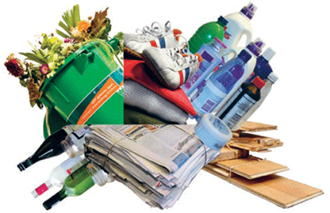
household wasteIn the course of most human activities substantial quantities of various wastes are generated. Now it is quite clear that such waste should be properly managed. Without appropriate waste management we would soon live on dumpsites and landfills than in our homes. The recent development in the suburbs of Beirut due to the city’s ongoing garbage crisis is a reminder. We only have to decide on whether we will recover, regenerate and reuse the waste otherwise disposed of, or not.

If, for instance, a plastic cup is discarded in mixed waste, such used packaging will lose not only any chance to be reused, but also its value. However, if household waste is properly sorted already at the household, particular waste items can be recycled and reused in the form of new, commonly applicable products.

Rubbish must be sorted at source in order for it to be recycled. 

The easiest way for waste sorting is at the point of origination, i.e., in your household at the end of the concerned item‘s service life as soon as you want to throw it away.  Simply, the packaging should be put into a basket, bag or box designed for the appropriate sorted waste type.

From experience it ensues that an average household mostly produces paper and plastic wastes. The largest spaces should therefore be reserved for putting the two waste types aside. Scrap glass should be best stored in plastic boxes. Many people put used beverage cartons in the same box or bag as used for used plastic packages leading to additional sorting at collecting containers (if not collected together).

Sorting rubbish

The following categories of rubbish can be sorted:

 Household waste

Glass: empty bottles and jars without cap or lid. In most municipalities, clear glass and coloured glass must be separated. New glass containers are made from the recycled glass. Warning: ceramics, tempered glass, pyrex or fireproof glass, mirrors, window panes and lightbulbs must not be included in the glass waste, but disposed of with bulky waste.

Paper and cardboard: newspapers, magazines, boxes and similar must be sufficiently clean to be recycled. Warning:  paper tissues, kitchen roll, stickers, juice boxes, carbon paper and wallpaper, dirty or grease paper and cellophane paper are not recyclable as paper and should be kept separately and disposed of in the regulation bag for non-sorted waste.

Plastic, Metal and Drink waste (PMD): packaging made of plastic or metal and drink cartons are used for recycling purposes to make new packaging, textile fibres, etc. Warning: butter wrappers, plastic pots (eg. yoghurt pots), packaging for hazardous and poisonous products, plastic bags and aluminum foil must not be included with the PMD waste. Put these in the regulation bag for non-sorted rubbish.

Organic waste: Greens (vegetables), fruit and garden waste, trimmings, grass and leaves are compostable. This waste can be collected at your home. It is also easy to compost it yourself for use in your garden.

Small hazardous waste or small chemical waste: syringes, fluorescent lamps, detergents, cosmetics, paint and varnish, used oil, pesticides and similar are harmful to the health and the environment. They need to be collected separately.

Reusable textiles: clothing, shoes, bed linen and similar are picked up at your home try to cultivate a habit of giving away used clothes in good condition to the less fortunate.

Discarded electrical and electronic appliances:  Refrigerators, televisions, computers, washing machines and similar can be handed in for free at the point of sales or at recycling plants.

– Culled from:

http://www.belgium.be/en/environment/sorting_and_recycling_household_waste#sthash.fBry5BEr.dpuf

http://www.kongsberg.kommune.no/Documents/tekniske%20tjenester/VAR/Renovasjon/150601_guide_ENG_web.pdf

http://ge.ch/dechets/media/dechets/files/fichiers/documents/Publications/sorting_household_waste.pdf

http://time.com/4235852/river-of-trash-beirut-suburbs


July Editions

Kitchen Waste: The Problem


By Ajibola Ameerahkitchen waste

Over the last few years, food waste has not been of major concern. Most people do not bother about food waste because it eventually rots away. With more information at our disposal, Food waste is a growing area of concern with many costs to our community in terms of waste collection, disposal and greenhouse gases.

Roughly one third of the food produced in the world for human consumption every year — approximately 1.3 billion tonnes — gets lost or wasted each year. Every year, consumers in rich countries waste almost as much food as the entire net food production of sub-Saharan Africa without forgetting that over 842 million people in the world do not have enough to eat.

When food rots, it creates methane (CH4) which has 21 times the global warming potential of carbon dioxide. Every time food is wasted, it is not just only about the food. The water, energy, time, manpower, land, fertilizer, fuel, packaging and MONEY put into growing, preparing, storing, transporting, cooking the food is also wasted.

If food waste was a country, it would be the world’s 3rd largest emitter of CO2.

Food waste can be generated from

  • Spoiled or out of date food
  • Peelings & trimmings
  • Inedible by-products, e.g. bones, coffee grounds, tea leaves
  • Kitchen error
  • Plate waste

So, what do we do to reduce and properly manage our food waste

  1. Shop wisely
  2. Store food correctly
  3. Use your freezer
  4. Cook what you need
  5. Use leftovers
  6. Refuse and re-use packaging
  7. Recycle waste
  8. Compost food scraps
  9. Finish all foods cooked
  10. Grow your own food.

Lets do our part in helping our environment.


July Editions

Reducing, Recycling and Reusing Paper

By: Ajibola Ameerah

Coolection of slices of paper isolated on white background

Coolection of slices of paper isolated on white background

Paper is a thin material produced by pressing together moist fibres of cellulose pulp derived from wood, rags or grasses, and drying them into flexible sheets. It is a valuable material with many uses including writing, printing, packaging, cleaning, and a number of industrial and construction processes.

In most homes, newspapers, magazines, textbooks, notepads etc. are found to be in abundance with little or no use. Soon, these papers become too much trouble and create a nuisance.

So, what do we do with them? Here are some tips on how to properly manage the growing piles of paper in our homes and also our various places of work.

Reducing Paper: The first step is to reduce the amount of paper we bring into our homes. With the wide increase of computer usage, many newspaper and magazine publishers have made articles that are found on printed sheets to be available online for us to read. Instead of buying newspapers every day, you can access the internet and read all your favourite articles online.

You can also reduce paper by

  • Leaving paper cases at the mall or market when you can
  • Avoid printing documents if you do not need them and print on both sides of the paper
  • Tell your kids and friends about paper reduction.

Reusing Paper: Have you ever thought of using your old newspapers, calendars, old sheets etc. to do something creative? This will be perfect if you have little kids around to keep them busy and increase their creativity. One way to reuse your old sheets is to create pieces of home decoration. You can achieve that by making PAPER MACHE. It can be simply put as mashed paper or “chewed paper” in French. There are various processes in making paper mache but i will give one of the simplest ways to achieve it.

You will need;

  • Old newspapers or any type of paper you want to get rid of
  • Starch
  • Water and
  • a bowl

Method: Soak the paper in water until the paper is really soft, you might decide to boil it to speed up the process. When the paper is soft, it is easy to shred. Once that is achieved, squeeze out the excess water as much as possible and add starch. Now, you can start creating whatever you want. Put out in the sun to dry and paint if desired. If you are sculpting on another object, remember to add cooking oil on the surface so the paper is not stuck when it is dry.

Paper mache bowl.

Paper mache

Paper mache

For more information on paper mache and other home paper decor, visit:

http://www.wikihow.com/Create-Papier-M%C3%A2ch%C3%A9

https://www.youtube.com/watch?v=Nyh14J03yaM

www.youtube.com/watch?v=gAks3Im5Y9c

http://www.topdreamer.com/20-cute-diy-newspaper-decoration-ideas/ http://gelliarts.blogspot.com.ng/2015/01/paper-mache-bowls-with-gelli-prints.html


Lastly and perhaps the most important, recycling paper; Recycling generally has so many advantages and so is recycling paper. Apart from eliminating unwanted materials in your homes, it also creates raw materials for recycling companies.

Recycling paper also has a lot of financial benefits. For example in the US, the annual payroll of recycled paper, paperboard and deinked market pulp mills is $6.9 billion. A lot of job opportunities are also created in the line of recycling. About one million jobs are created world wide in the paper recycling business. Recycling one ton of newsprint saves about 1 ton of wood while recycling 1 ton of printing or copier paper saves slightly more than 2 tons of wood.

* Instead of felling more trees to create new paper, you can contribute to helping the environment by supplying your unused paper to local paper recycling companies around you*

Culled from

https://en.wikipedia.org/wiki/Paper

https://en.wikipedia.org/wiki/Paper_recycling

https://www.paperrecyclingcoalition.com/recycled/index.php/why-recycle-paper/


July Editions

Changing The Game of Recycling

With a combined fortune of over $7 billion, Anthony Pratt and Zhang Yin have revolutionized the recycling trade with their focus on paper recycling to cardboard boxes.

anthony Pratt

Anthony Pratt stands among 30-foot rolls of paper — all made entirely from recycled paper. (Photo: Jamel Toppin for Forbes.)

For Anthony Pratt, His privately held Pratt Industries is one of the fastest-growing players in America’s $35 billion corrugated packaging industry and the only big boxmaker using 100%-recycled paper. By taking the nation’s paper trash–yellowed newspapers and greasy pizza boxes–and turning it into new packaging, Pratt has helped bolster a personal fortune FORBES estimates at $3.4 billion, while saving some 50,000 trees a day. That’s especially significant in today’s world of online shopping, where everything comes in a box. “We were in recycling before recycling was cool,” says Pratt, 55.

Pratt’s journey began at a single wasteful paper mill in 1991. That’s when he was dispatched to the U.S. from Australia, where his family operated Visy, a recycled-packaging juggernaut founded by his grandfather in 1948. (Today Pratt Industries and Visy operate as sister companies, both run by Pratt.) Arriving in the country he quickly saw a gap in the market. Everyone was making paper from trees. Why wasn’t anyone just recycling the stuff heading for the landfills, as Visy did in Australia? He soon shuttered the Macon mill and focused on recycling the waste produced by competitors.

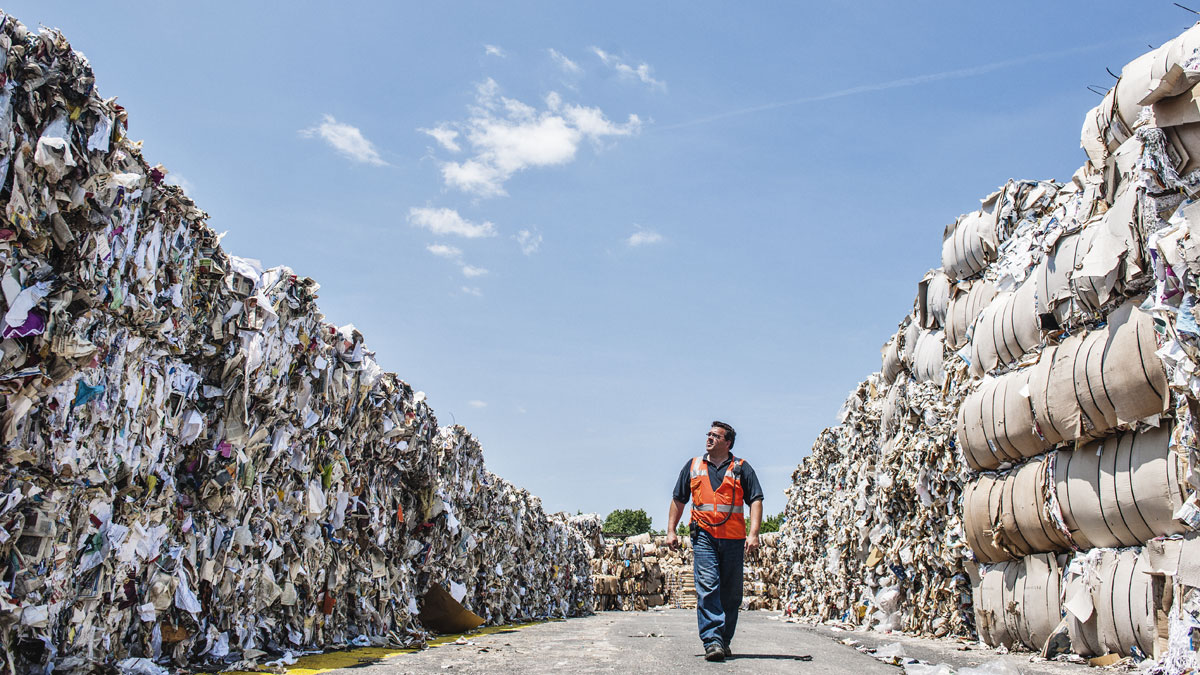
A Pratt Industries employee walks through a maze of refuse that will soon be turned into some of the 12,000 boxes Pratt produces every day. (Photo: Jamel Toppin for Forbes.)

A Pratt Industries employee walks through a maze of refuse that will soon be turned into some of the 12,000 boxes Pratt produces every day. (Photo: Jamel Toppin for Forbes.)

That decision–made more than a decade ahead of the recent consumer-driven outcry for greener products – unleashed a domino effect of efficiency. Unlike his rivals, who must operate mills close to timber sources and then send the paper to factories near cities, where it’s turned into boxes, Pratt situates operations where they make the most logistical sense: near cities, which are full of waste–and customers–thereby cutting transportation costs.

Zhang Yin “Queen of Trash” as she is fondly called  had formed a company in the 1990s to collect paper for recycling and ship it to China. It was a step up from life in Hong Kong, where she had opened a paper-trading company with $3,800 to cash in on China’s chronic paper shortages.

“I remember what a man in the business told me back then,” Zhang Yin said. “He said, ‘Waste paper is like a forest. Paper recycles itself, generation after generation.'”

Zhang Yin

Zhang Yin

Her companies take heaps of waste paper from the United States and Europe, ship it to China and recycle it into corrugated cardboard, which is then used for boxes that are packed with toys, electronics and furniture that are stamped “Made in China” and then often shipped right back across the ocean to Western consumers.

After the boxes are thrown away, the cycle starts all over again.

Late last year, Forbes magazine named Zhang the wealthiest woman in China. She may even be the richest self-made woman in the world, challenging a handful of others.

That company, Nine Dragons Paper, is now the biggest paper maker in China. It raised nearly $500 million when it went public in Hong Kong last March.

“My goal is to make Nine Dragons, in three to five years, the leader in containerboards,” Zhang said emphatically during a short interview in her Hong Kong office. “My desire has always been to be the leader in an industry.”

She has not lost her ambition, though. Sometimes called the Queen of Trash, she doesn’t disown the title. But, she said, “Someday, I’d like to be known as the queen of containerboards.”

Zhang and Pratt innovations in recycling have not only created income for them but as well created a domino effect across the world with the embrace and awareness of recycling increasing swiftly.

Sources:

http://www.chinadaily.com.cn/china/2006-10/20/content_713250.htm

http://www.nytimes.com/2007/01/15/business/worldbusiness/15iht-trash.4211783.html?pagewanted=all&_r=0

http://www.forbes.com/sites/chasewithorn/2015/07/29/recycling-riches-how-australian-billionaire-anthony-pratt-is-getting-wealthier-off-americans-trash/


July Editions

Achieving Sustainable Development Goals With The Wecyclers Model

SDGS

At the United Nations Sustainable Development Summit on 25 September 2015, more than 150 world leaders adopted the new 2030 Agenda for Sustainable Development, including the Sustainable Development Goals (SDGs).

The 17 new Sustainable Development Goals, also known as the Global Goals, have a more ambitious agenda, seeking to eliminate rather than reduce poverty, and include more demanding targets on health, education and gender equality. They are universal, applying to all countries and all people and aim to end poverty, hunger and inequality, take action on climate change and the environment, improve access to health and education, build strong institutions and partnerships, and more.

With this global transition from millennium development goals to the more effective and broad Sustainable development goals, we highlight how the Wecyclers model works to effectively achieve some of these goals.

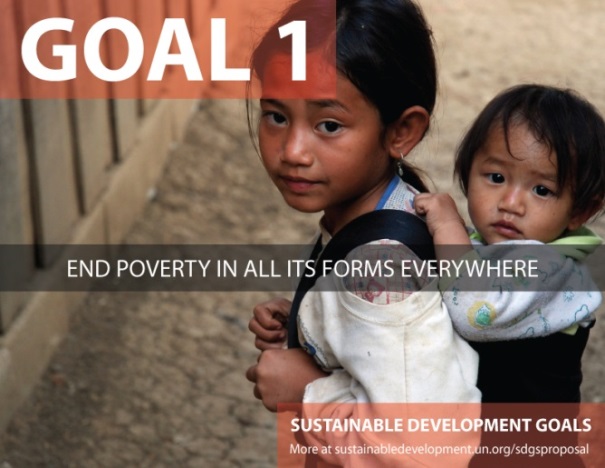
Goal 1


Goal 1: End poverty in all its forms everywhere. By 2030, eradicate extreme poverty for all people everywhere, currently measured as people living on less than $1.25 a day.

With the Trash to cash model of Wecyclers, subscribers who make up the first and primary chain of the business are able to create value through their recyclable waste by exchanging trash for products that help aid daily living and in turn reducing poverty.


Goal 4


Goal 4. Ensure inclusive and equitable quality education and promote life-long learning opportunities for all.
Education remains a top priority and remains the singular most important tool for sustainable development; this has made us implement the Trash for Education program where we reward subscribers with tuition, educational support and educational materials.


Goal 6


Goal 6: Ensure availability and sustainable management of water and sanitation for all
Lagos, Nigeria with a population of nearly 20 million people produces about 13,000 metric tons of waste bulk of which is left uncollected including recyclable waste. At Wecyclers we are persistently working to reduce the waste crisis in Lagos, create community and concerted efforts to improve sanitation in line with the Sustainable development Goals.


Goal 8Goal 8: Promote sustained, inclusive and sustainable economic growth, full and productive employment and decent work for all.

In its 3 years of operations Wecyclers team have been able to service to over 7,000 households and create 52 direct jobs and several others through its network. Some of its workers have gone on to imbibe the entrepreneurship drive and in turn become job creators in other aspects. After collection of recyclable waste, Wecyclers aggregates the materials at the household level to sell to local recycling processors. Wecyclers provides a consistent supply of well-sorted, high quality recyclable materials to processors, thereby alleviating their supply constraints and indirectly creating jobs at that level.


Goal 12


Goal 12: Ensure sustainable consumption and production patterns
Vitally important in the Wecyclers operation is the need to create awareness on the need to ensure sustainable consumption and production patterns. Through its partnerships and constant community based awareness, Wecyclers has also extended this awareness to the early learners (Children) educating them on the need to ensure sustainable consumption and production patterns.


Goal 17


Goal 17: Strengthen the means of implementation and revitalize the global partnership for sustainable development.
Partnerships build the world over. Through the partnerships we have created with government and businesses we have been able to implement our programmes and as well drive the implementation of the Sustainable development goals by our partners.

July Editions

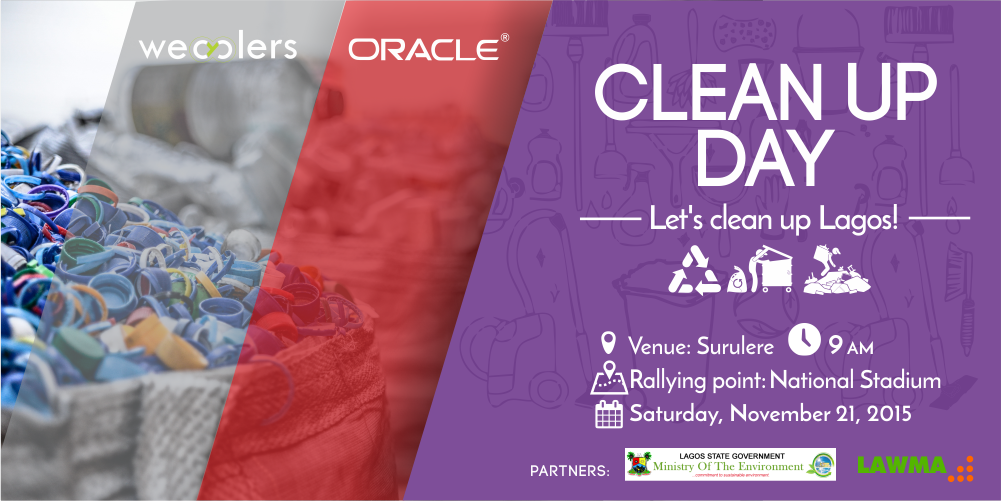
We Clean Up Surulere November 21st #LetsCleanUpLagos

Clean Up Day baner design

Join us as we clean up and promote recycling in Lagos communities. The cleanup day will be in partnership with Oracle.

Others
Surulere, Lagos.
Saturday, November 21, 2015
9:00 AM ‐ 12:00 PM
08120094324
July Editions

Green advocate Mrs Chinwe Ohajuruka, shares insights into her vision

By Ajibola Ameerah

Every first Monday in October is World habitat day (UN International day) . To commemorate, we had an interview with Mrs Chinwe Ohajuruka, CEO of Comprehensive Design Services to talk about the affordable green houses she has been able to provide for the people of Rivers State.

Mrs Chinwe Ohajuruka

Mrs Chinwe Ohajuruka

Mrs Chinwe Abulokwe Ohajuruka is a “green” Architect, Project Manager and Sustainability Consultant with over 26  years’ work experience in a variety of international settings. She has been involved with several design projects for collegiate, commercial, residential, institutional and industrial clients. Having designed and managed building projects in Nigeria, the United States and five other countries, she has a diverse background that complements the diverse and international settings she has found herself in. She is the CEO of Comprehensive Design Services,  a firm that is committed to practical sustainable design solutions for Nigeria. The organization started in 2012
Ajibola Ameerah: Congratulations on the 2015 Cartier award for Sub Saharan Africa. How do you feel about the award?

I am very happy, I feel elated and most importantly, I feel Cartier has selected my project because they feel that dignity for Nigerians is important. They have promoted dignity of owning your home of having your own kitchen, bathroom and toilet inside your home where women and girls can be safer with clean water and power.

A: To survive, humans need food, shelter and clothing. Why did you decide to go into building homes and not something else?

Just as you said, food shelter and clothing are fundamental human rights. I am an architect so i have focused on buildings and especially, I have focused on affordable housing because I believe that access to decent affordable housing is a fundamental human right

A.A: It is not common to see builders take renewable energy or going green into consideration as part of their goals when creating structures especially on a large scale in developing countries like Nigeria. What made you think differently?

Because I am a green architect. Green means that I believe in sustainable design, I believe that anything we do should be profitable, should be for the people

A: The population and unemployment rate in the country keeps increasing in geometrical rates, how much of an impact have you made and how many families have benefited from your Passive House Prototypes (PHP) knowing fully well that an unemployed man has limited resources to rent a house; let alone buy one?

Eight families have been transplanted from the slums; the waterside slum in Port-harcourt into our passive house prototypes and we are getting ready to build thirty-two more units next year and sixty-four more units in 2017. We are also working with another state government to build 400 units in the state

A.A: Are you limiting your organization to be a Nigerian affair or going global with it? How do you see this organization in the next 10 years?

I am talking to representatives in 7 other African countries. I am not limiting it to only Nigeria, I am thinking of working around Sub-Saharan Africa

A.A: As any business or social enterprise, limitations and challenges would arise, what are those challenges and how have you been able to overcome them?

Many of the challenges we face have to be solved on a national level. For example, it is difficult to get cheap land in a good area and it is difficult for the people; the off takers of my buildings to get affordable mortgages and so we are working on this. We are working with mortgage and micro finance institutions and we are also talking to the government about making land in good areas available for affordable low cost development

A.A: There are so many people living in slums and poor housing facilities in the country. What do you think the government can do to improve housing conditions of the people?

Many many people have written about what the government needs to do. If you google affordable housing and Nigeria housing deficits, at least 1000 people have written, on the internet, in newspapers, on talk shows, they have advised the government on what needs to be done. So my advice is that the government listens to the people. People have talked about changing the land use tenure system, people have talked about bringing down the price of building materials, people have talked about there being power and water, people have talked about there being affordable mortgages. So many people have said so many things about what needs to be done to fix the housing deficit in the country and the government needs to listen.

A.A: Tell us your vision in 5 words

To be a leading provider of affordable green housing.


AhmeerahThis interview was conducted by Ajibola Ameerah, an intern at Wecyclers. She is a student of the University of Ilorin currently pursuing her Bachelor Degree in Geography and Environmental Management.   


September Editions

Wecyclers Cleanup Day

clean up day6


Join us as we keep fit cleaning up the community by promoting recycling in Lagos communities.
The cleanup day will be in partnership with Slum2School Africa and Poverty Stops Here. The waste collected will be sold and used to fund educational projects; from school fees to textbooks, school supplies and so on.

Others
Lawma Yard, Odakili Str., behind Mainland LGA off Apapa, Ebute Metta, Lagos.
Saturday, October 10, 2015
10:00 AM ‐ 02:00 PM
08120094324